
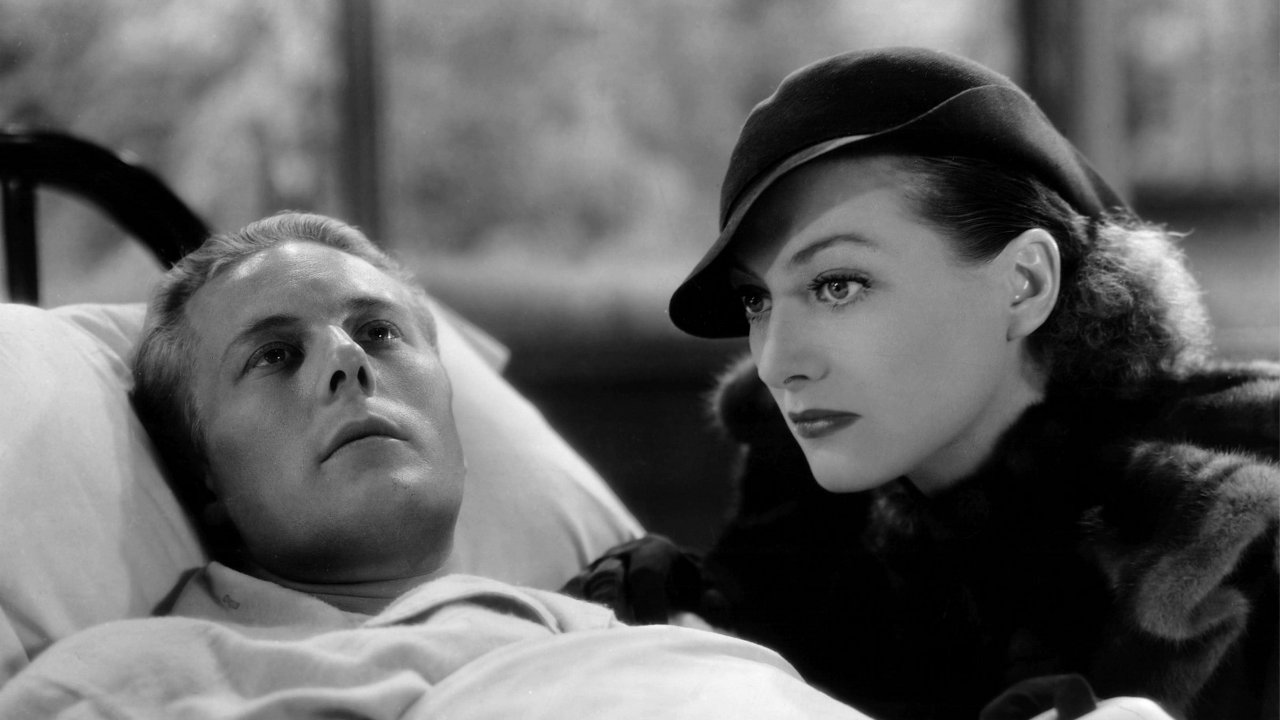
 Warner Archive has released a Blu-ray upgrade of 1934’s Sadie McKee, a late pre-Code film that was one of Joan Crawford’s best films of the era.
Warner Archive was a godsend for film collectors beginning in 2009 when it began releasing hard-to-find classic films on MOD (manufactured on demand) DVDs well into the DVD era. Three years later, it began releasing films on hard-pressed Blu-rays and eventually stopped releasing DVDs, while continuing to release Blu-rays but at a much slower pace.
Since the Covid-19 pandemic and the rise of TV streaming, Blu-ray manufacturing has slowed considerably in part due to the closing of manufacturing plants and Warner Archive Blu-rays have become a niche business. Their product is limited to no more than five releases per month, Films that they do release, however, look and sound better than they ever have before.
Sadie McKee is one of many Crawford films they have released over the years. Though not a classic like Grand Hotel, The Women, Mildred Pierce, or What Ever Happened to Baby Jane?, it is, nevertheless, a film that holds up well.
Based on a story by Nina Delmar (Make Way for Tomorrow), it presents Crawford at her best as she goes from cook’s daughter to lady of the manor and eventually, working girl, just as her fans of the day wanted to see her.
The film is directed by Clarence Brown, Garbo’s favorite director (Anna Christie, Anna Karenina) in the 1930s and later the director of such 1940s classics as The Human Comedy, The White Cliffs of Dover, National Velvet, The Yearling, and Intruder in the Dust). As in all his films, Brown’s direction of his entire cast is as meticulous as it is of that of his star.
Crawford has three leading men, Gene Raymond as her unfaithful first beau, Edward Arnold as her wealthy husband and her then real-life beau, and later husband Franchot Tone as her true love.
The film begins with Crawford acting as an extra hand in serving the wealthy family her mother works for with Tone as the lawyer son on a visit home. Shocked to hear Tone berating her errant beau, she throws a tantrum and tells of Tone, his family, and their guests and elopes with Raymond to New York where he comes under the spell of a semi-popular showgirl (Esther Ralston) who invites him to join her nightclub act. Crawford gets a job in a nightclub herself, and on the rebound marries wealthy Arnold, a happy drunk whose lawyer is the still disapproving, Tone who secretly loves her.
This was the first film in which alcoholism was treated as a disease instead of a comic device. Arnold (Easy Living, Mr. Smith Goes to Washington, The Devil and Daniel Webster) considered it his all-time favorite role.
The supporting cast is headed by Jean Dixon (My Man Godfrey, Holiday) as Crawford’s smart-mouthed friend Opal and Leo G. Carroll (Notorious) in his film debut as Arnold’s butler and enabler. Akim Tamiroff (The General Died at Dawn, For Whom the Bell Tolls) is also a standout as Crawford’s boss at the nightclub. Drama coach Helen Ware plays Crawford’s mother.
Frank Conroy (The Ox-Bow Incident) and Samuel S. Hinds (It’s a Wonderful Life) are uncredited as doctors as are Ethel Griffies (The Birds) as a woman on the subway and Minerva Urecal (Mr. Hobbs Takes a Vacation) as Arnold’s cook’s assistant.
A more topical Crawford film that has yet to make it to Blu-ray is 1951’s Goodbye, My Fancy which you can still find on an earlier Warner Archive DVD.
Goodbye, My Fancy was based on Fay Kanin’s 1948 Broadway play starring Madeleine Carroll, Conrad Nagel, and Shirely Booth in a Tony Award-winning performance. Crawford had Carroll’s role as a U.S. Congresswoman from Massachusetts with Robert Young had Nagel’s role of the college president with whom she once had an affair, while Eve Arden had Booth’s role as her wisecracking secretary.
What makes the film relevant to today’s world is the romantic dramady’s subplot in which the students in the all-girls college features a debate over whether the girls should be allowed to see a film about banned books in other countries amid concerns that such things could happen here.
Crawford and Arden are excellent in their roles while Young, who was two years younger than Crawford, is given a silver streak in his hair to make him look older, is a bit stiff in one of his last film roles before becoming a TV legend beginning with Father Knows Best three years later.
Frank Lovejoy (In a Lonely Place), who was six years younger than Crawford, plays Young’s romantic rival, a Time Magazine photographer. That role was played on Broadway by Sam Wanamaker (The Spy Who Came in from the Cold) who also directed the play.
Janice Rule (3 Women), in her film debut, radiates charm as Young’s daughter.
Other standouts include Howard St. John (Born Yesterday) as a bombastic college trustee, Lurene Tuttle (TV’s Life with Father) as his wife and Crawford’s former college roommate, and Ellen Corby (I Remember Mama) and John Qualen (The Grapes of Wrath) who are underutilized as long-time college professors.
The film was directed by Vincent Sherman who had previously directed Crawford in The Damned Don’t Cry and Craig’s Wife. He also directed with Crawford’s screen rival Bette Davis in Old Acquaintance and Mr. Skeffington as well as Richard Todd in The Hasty Heart, Paul Newman in The Young Philadelphians, Richard Burton in Ice Palace, and Debbie Reynolds in The Second Time Around and could and did tell stories about all of them in his almost 100 years (1906-2006).
Happy viewing.




















Leave a Reply