
 May is Mental Health Month, a subject that the screen has explored many times. Here in chronological order are ten of the most unforgettable films that have explored mental health issues, offering insight into various conditions of human experience.
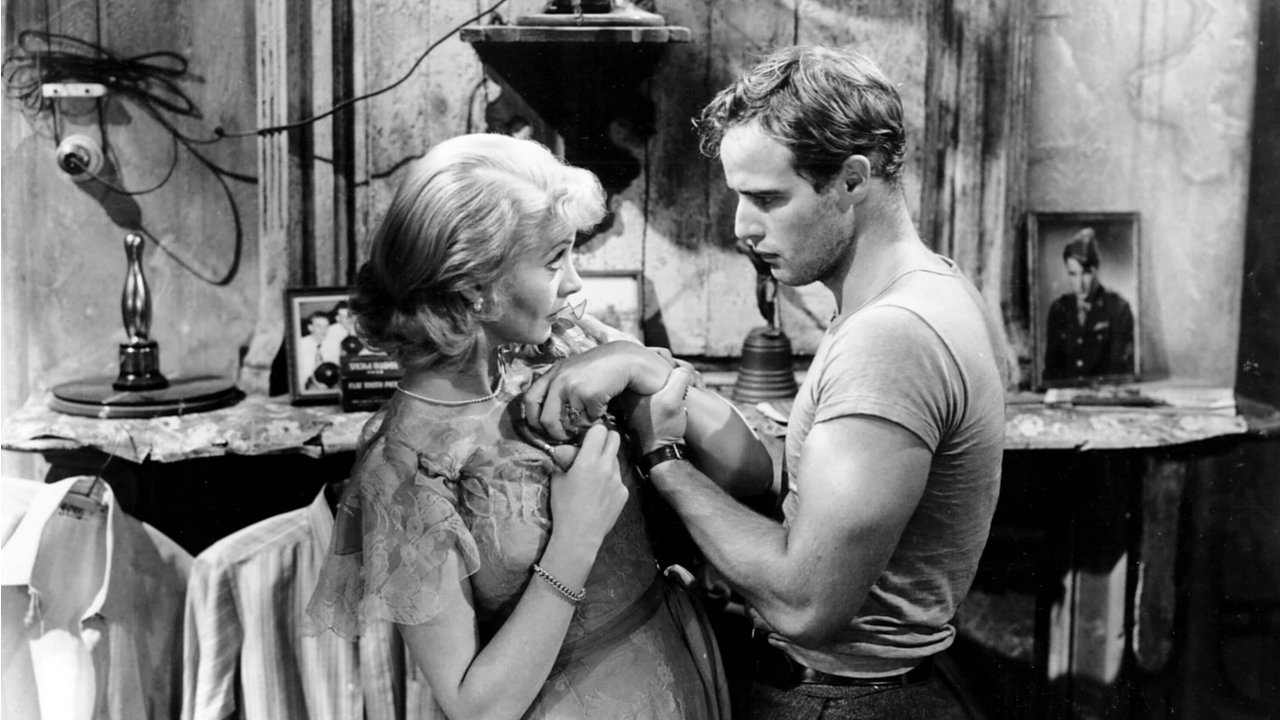
One can find elements of mental health problems in characters in practically all the films made from Tennessee Williams’ plays, but none more so than 1951’s A Streetcar Named Desire. This classic film focuses on the mental decline of Blanche DuBois as she struggles with her past and present realities. Superbly played by Vivien Leigh in her second Oscar-winning role, Blanche’s problems are made worse by her relationship with her brutish brother-in-law, superbly played by Marlon Brando in an equally great Oscar-nominated performance. Kim Hunter as Blanche’s sister and Karl Malden as Blanche’s hesitant beau won Oscars for their supporting roles.
Alfred Hitchcock was no stranger to films about mental illness. None, however, had greater impact on audiences than 1960’s Psycho, a horror film about a mentally unbalanced motel manager, played by Anthony Perkins in his signature role, who takes advantage of a desperate woman played by Janet Leigh in an Oscar-nominated performance. The film has a palpable sense of dread before we even meet Perkins whose mother-controlled inner demons take control of him at Leigh’s expense. Vera Miles as Leigh’s sister, John Gavin as Leigh’s lover, Martin Balsam as a too inquisitive private investigator, and John McIntire as the local sheriff provide sterling support.
Off-screen as well as on-screen rivalry between two legendary movie stars is the stuff of legends that takes 1962’s What Ever Happened to Baby Jane? well beyond its potboiler tropes. Off-screen Bette Davis and Joan Crawford were faded movie queens who had been rivals for decades. On screen they were sisters, one whose career had long ago gone into decline while the other’s thrived. Now Davis as the former child star, driven by madness and alcohol, is the caregiver for Crawford who is confined to a wheelchair as the result of an auto accident. Davis, in the more colorful role, was nominated for an Oscar while Crawford, who wasn’t nominated, accepted Anne Bancroft’s Oscar for The Miracle Worker to Davis’s chagrin.
There had been other films set in mental institutions before 1975’s One Flew Over the Cuckoo’s Nest but none took critics or audiences more by storm than this one in which Jack Nicholson, in the first of his three Oscar-winning performances, plays a recidivist petty convict serving time for statutory rape, who pleads insanity to avoid labor duties in prison and is sent to a mental institution where he undergoes psychiatric evaluation. A manipulative nurse, played by Louise Fletcher, who also won an Oscar for her performances, drives him really insane in this powerful portrayal of life in the institution. Oscars also went to the film as Best Picture and Milos Forman as Best Director.
There is no horror in 1980’s Ordinary People other than the horror of the everyday struggles of Timothy Hutton in his Oscar-winning portrayal of a teenager who survives an attempted suicide after the accidental death of his older brother. The film, which also won Oscars for Best Picture and Best Director for Robert Redford, deals with themes of grief, survivor’s guilt, and family dynamics in wake of family tragedy like no other. Mary Tyler Moore was nominated for her portrayal of Hutton’s cold, standoffish mother, and Judd Hirsch was nominated as his psychiatrist. Donald Sutherland, who is equally as effective as Hutton’s father, was inexplicably not nominated.
Dustin Hoffman won his second Oscar for Best Actor for his portrayal of an autistic savant in 1988’s Rain Man, a touching story that shed light on a subject largely unknown to the general public until the release of the film, which also won Oscars for Best Picture and Director Barry Levinson. Told from the standpoint of Hoffman’s younger brother, played by emerging star Tom Cruise, the film explores the complexities of familial relationships and mental health. Cruise’s character was unaware of his brother’s existence until his father died leaving a fortune to the savant. Hoffman, originally hired to play Cruise’s part, asked to play his Oscar-winning character after meeting several real savants.
Johnny Depp had one of his best early roles playing a struggling young Midwesterner taking care of both his mentally disabled teenage brother and a morbidly obese housebound mother in 1993’s What’s Eating Gilbert Grape, was written by Peter Hedges and directed by Lasse Hallstrom. Despite Depp’s fine performance, the film’s greatest acclaim was accorded the performances of Leonardo DiCaprio as his brother and Darlene Cates as his mother. DiCaprio, in his star making role, received the first of his seven Oscar nominations to date. Cates, who played similar roles mostly on TV in later years, also received awards recognition for her performance. Oscar, however, ignored her.
Aside from Toni Collette’s reasonably sane mother in 2005’s Little Miss Sunshine, all the characters in this film about a family road trip from Albuquerque, New Mexico to California in their VW bus to enter her 7-year-old daughter (Oscar nominee Abigail Breslin) in a beauty pageant, are mentally challenged. Her husband (Greg Kinnear), a failed motivational speaker, is barely speaking to her; her brother (Steve Carrell) is recovering from a suicide attempt; her son from a previous marriage (Paul Dano) has taken a vow of silence; and her elderly foul-mouthed father-in-law (Oscar winner Alan Arkin) has been kicked out of a nursing home for misbehaving. And that’s before we meet the nuts at the pageant.
Ryan Gosling had one of his best early roles as a delusional young man 2007’s Lars and the Real Girl. An awkwardly shy young man in a small northern town, he is unable to form a romantic relationship until he finally brings home the girl of his dreams to his brother and sister-in-law’s home. The only problem is that she’s not real – she’s a sex doll he ordered off the Internet. Sex, however, is not what he has in mind. He’s looking for a deep, meaningful relationship. His sister-in-law is worried about him, his brother thinks he’s nuts, but eventually the entire town goes along with his delusion to show their support of this sweet-natured boy that they’ve always loved.
Based on his critically acclaimed novel, Stephen Chbosky’s 2012 film, The Perks of Being a Wallflower is a coming-of-age story that addresses trauma, depression, and the importance of friendship and support. Logan Lerman stars as a 15-year-old boy struggling with life after the suicide of his only friend the summer before he enters High School. Befriended by a compassionate teacher (Paul Rudd) and a small circle of friends including gay Ezra Miller and his stepsister (Emma Watson) with whom Lerman falls in love, he begins to heal only to have further setbacks. On his birthday on Christmas Eve, he has a flashback that triggers his memory to the cause of the start of his mental problems and is able to finally move on.
All these fine films are available on home video.
Happy viewing.





















Leave a Reply