
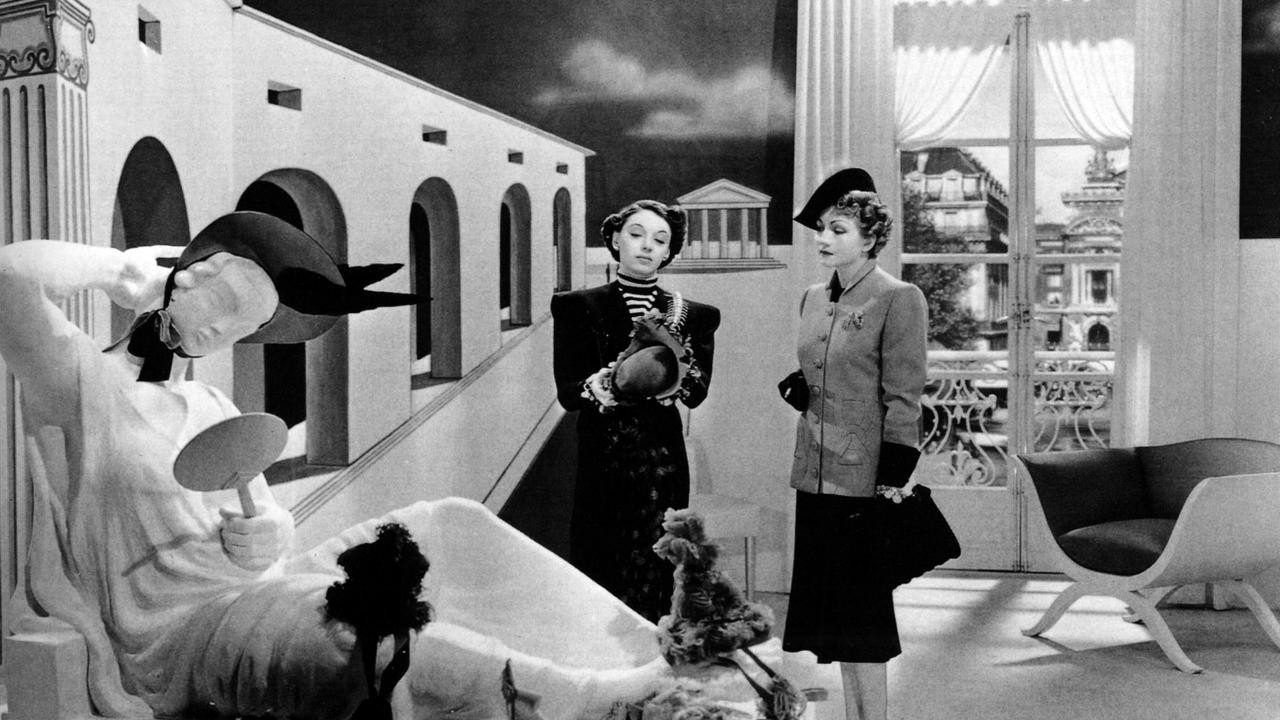
 The Criterion Collection has released Mitchell Leisen’s 1939 screwball comedy, Midnight, on Blu-ray.
Midnight may not be one of the films you think of as one of the greatest of the so-called greatest year in film history, but it has its aficionados. Released in May of that year, the film starred Claudette Colbert, Don Ameche, John Barrymore, Francis Lederer, and Mary Astor.
Leisen began his film career as an art director and costume designer in 1920. Among the films he worked on as an art director were 1927’s The King of Kings and Chicago, 1929’s Dynamite for which he was nominated for an Oscar, 1930’s Madam Satan, and 1932’s The Sign of the Cross. He transitioned into directing with 1933’s The Eagle and the Hawk for which he went uncredited. By 1934, he had his first major success as a director with Death Takes a Holiday. He went on to direct such popular comedies as 1935’s Hands Across the Table and 1937’s Easy Living. Midnight was his most ambitious project to date.
Following Midnight, Leisen went on to direct such films as 1940’s Remember the Night and Arise, My Love, 1941’s Hold Back the Dawn, 1943’s No Time for Love, 1945’s Kitty, 1946’s To Each His Own, 1950’s No Man of Her Own, and 1951’s The Mating Season, with 1957’s The Girl Most Likely his last before transitioning into television.
The screenplay for Midnight was the second collaboration of Billy Wilder and Charles Brackett. Their first was Ernst Lubitsch’s 1938 comedy, Bluebeard’s Eighth Wife which starred Claudette Colbert and Gary Cooper.
Brackett continued as Wilder’s co-writer after he himself became a director. Together they produced such classics as 1944’s Double Indemnity and 1945’s The Lost Weekend, going their separate ways after 1950’s Sunset Boulevard.
The goings-on in Midnight are ridiculous, even for a screwball comedy, but everything works thanks to Wilder and Brackett’s witty banter, the accomplished cast’s fine performances, and Leisen’s astute direction.
Colbert is a gold-digger who charms her way through Paris from humble immigrant taxi driver Ameche through besotted wealthy gentleman Barrymore, lothario Lederer and more before realizing she truly loves Ameche. Astor is Barrymore’s wife who is having a fling with Lederer when Colbert comes along.
Colbert was already past 30 in 1934 when she starred in Frank Capra’s It Happened One Night for which she won an Oscar in the same year that she also starred in the box-office hits, Imitation of Life and Cleopatra. She was 36 when she starred in Midnight with just one more major comedy role to come with 1942’s even more delightfully screwy The Palm Beach Story opposite Joel McCrea, directed by Preston Sturges. After that her best roles were as more mature middle-aged women in such dramatic films as 1943’s So Proudly We Hail!, 1944’s Since You Went Away, 1950’s Three Came Home, and 1951’s Thunder on the Hill.
She would have had two more iconic roles, but extenuating circumstances forced her to drop out of both 1948’s State of the Union and 1950’s All About Eve for which she was replaced by Katharine Hepburn and Bette Davis, respectively. Her last theatrical film was 1961’s Parrish but she returned in triumph 26 years later in an Emmy nominated performance in 1987’s The Two Mrs. Grenvilles opposite Ann-Margret.
Ameche had starring roles in 1938’s In Old Chicago and Alexander’s Ragtime Band but he was second-billed to Tyrone Power in both. Midnight was his first top-billed male role in a major film. His next film was The Story of Alexander Graham Bell in which he played the title role. His most acclaimed role ws in 1943’s Heaven Can Wait. Although his career waned in the late 1940s, he was never out of the public eye and won an Oscar late in life for 1985’s Cocoon.
Barrymore was a major star in silent film who had acclaimed starring roles in such early talkies as 1932’s Grand Hotel and A Bill of Divorcement, 1933’s Dinner at Eight, and 1934’s Twentieth Century. In character roles in such later films as 1936’s Romeo and Juliet and 1938’s Marie Antoinette, Midnight brought him renewed acclaim.
Lederer is best known for his performances in G.W. Pabst’s 1929 silent film, Pandora’s Box and 1939’s Confessions of a Nazi Spy in which he had the title role.
Astor made her film debut in 1921 and worked steadily through 1964. Among her most acclaimed performances were those in 1930’s Holiday, 1932’s Red Dust, 1936’s Dodsworth, 1937’s The Prisoner of Zenda and The Hurricane, 1941’s The Great Lie and The Maltese Falcon, 1942’s The Palm Beach Story again with Colbert, 1944’s Meet Me in St. Louis, 1949’s Act of Violence, 1961’s Return to Peyton Place, and 1964’s Hush…Hush, Sweet Charlotte.
Available through Amazon Marketplace, Onesmedia has released two volumes of Charlie Chan movies on reasonably priced DVD-R’s. These are not the old public domain issues of the Chan films before 20th-Century Fox released the Warner Oland and Sidney Toler films made at the studio on pristine discs with optional subtitles and extras, but duplicates of the Fox transfers as well as the subsequent pristine releases on Warner Home Video and MGM starring Toler.
The first volume consists of 16 films including 1929’s Behind That Curtain in which Chan plays a minor role and 1931’s Eran Trece, a Spanish language version of the lost Charlie Chan Carries On, recreations of the lost Charlie’s Chan’s Chance and Charlie Chan’s Courage as well as 12 Oland films from Charlie Chan in London through his last, 1937’s Charlie Chan at Monte Carlo on 10 discs.
The second volume consists of all 22 of Toler’s films from 1938’s Charlie Chan in Honolulu through 1946’s The Trap on 11 discs,. The later abysmal poverty row Chan films starring Roland Winters are not included.
This collection is highly recommended to anyone who doesn’t already own the Fox, Warner, and MGM releases or who may have given them away due to space considerations. These nicely packaged volumes take up no more room than two Criterion Collection films.
Happy viewing.


















Leave a Reply