
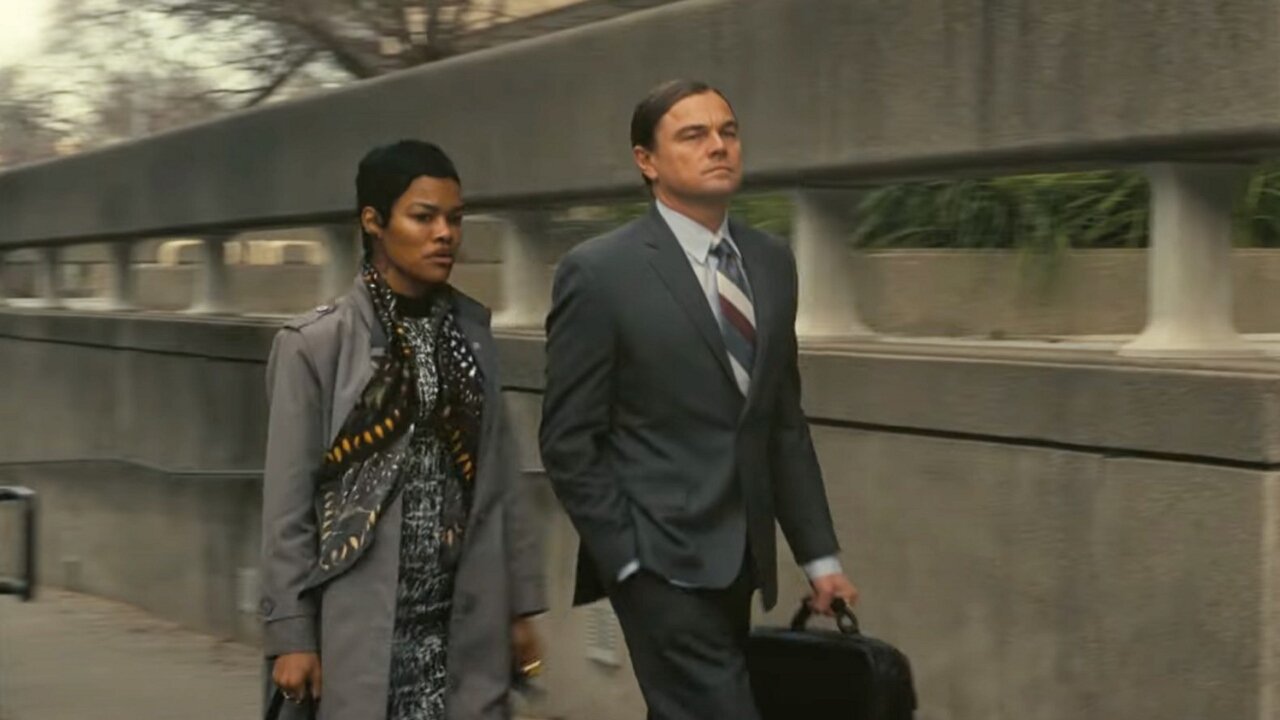
One Battle After Another
Rating

Director
Paul Thomas Anderson
Screenplay
Paul Thomas Anderson
Length
2h 41m
Starring
Leonardo DiCaprio, Sean Penn, Benicio Del Toro, Regina Hall, Teyana Taylor, Chase Infiniti, Wood Harris, Alana Haim, Paul Grimstad, Shayna McHayle, Tony Goldwyn, John Hoogenakker, Starletta DuPois, Eric Schweig, D.W. Moffett, Kevin Tighe, Jim Downey, James Raterman, Dijon Duenas, Dan Chariton, Jon Beavers, Tisha Sloan, Jena Malone
MPAA Rating
R
Original Preview
Review
When reality is unbearably depressing, it takes a master filmmaker to find a way to distillate the cultural and political environment into a palatable and refreshing motion picture experience. One Battle After Another is a quasi-futuristic look at the absurd but frightening nature of modern America.
Opening on a liberation operation conducted by revolutionary group French 75, “Ghetto” Pat Calhoun (Leonardo DiCaprio) and Perfidia Beverly Hills (Teyana Taylor) lead the small team into a makeshift concentration camp run by Col. Steven J. Lockjaw (Sean Penn). The raid is successful but Perfidia has to make a deal with Lockjaw who is sexually aroused by her humiliation. Afterwards and following a string of successful raids, they are brought down by a bank robbery that sends Pat into hiding and Perfidia on the lam, leaving behind her young daughter Willa for Pat to care for.
Fast forward sixteen years with Pat leading a sequestered life with only Willa (Chase Infiniti) to keep him company. They’ve been successfully avoiding capture until a mysterious secret society encourages Lockjaw to redouble his efforts to ensure he is not the father of Perfidia’s daughter and thus tarnishing his straight white male credentials. In a race against time, Pat urges her to go into hiding but when she’s captured, he must call on an old associate, Sergio St. Carlos (Benicio del Toro), Willa’s martial arts instructor, and with his help the various pieces of the chess board move into position for a blistering finale.
Few directors have the skill it takes with large ensembles to elicit their best performances but Paul Thomas Anderson is among the best with only Robert Altman a fair comparison. As such, there isn’t a bad performance in the bunch and many of them are exceptional, even minor characters that are in the film only briefly give it a significant boost. It must also be said that these aren’t your everyday characters in an Anderson film. Many of his prior projects from Boogie Nights to There Will Be Blood are incredibly serious treatises on their subjects.
Here, the characters are designed to be outlandish archetypes as painted by those who view them from a prejudiced perspective. If you asked a hard right poster in the comments section of a post to describe left-wing agitators, you’d get Perfidia and Pat. If you asked someone on the left the same of figures on the right, they’d describe Col. Lockjaw. The only character that isn’t drawn with a satirical brush is Willa who represents the common American, looking on at the absurdity of the villainy going on around her and heaving an exasperated sigh whether it’s at the buffoonery of her protective father or the moustache-twirling evil of her biological father. Infiniti’s stellar debut performance is the vessel for the frustrations and worry of countless Americans.
Taylor starts the film off with a bombshell of a character, giving Perfidia a confidence that drowns everyone around her but infuses it with just enough vulnerability to keep the character credible. It’s too bad she isn’t much of a player in the film’s second and third acts. DiCaprio plays the frustrated, pot-addled father figure well, giving Pat his easily-ruffled demeanor and genuine compassion for those around him. Penn doesn’t often do these kind of roles but he seems born to play them. Col. Lockjaw is simultaneous regimented, perverted, egocentric, and oblivious, unaware just how one-dimensional he is. Del Toro does his typically good work, confident and righteous, Sergio is everything we expect from a sensei, full of wisdom and forethought. That said, he is perhaps the least impressive of the central quintet.
Anderson’s films have always been interesting. From his examination of the porn industry in Boogie Nights to the vagaries of small town and interpersonal dynamics in Magnolia to the greed and obsession of There Will Be Blood, his pictures are always about heady topics and One Battle After Another is no different but it’s a bit of a departure from his usual serious or slightly mocking tone. This is right out of the outlandish playbook of 1980s Coen Brothers. The broad characters, the bizarre situations, and the bumbling but intelligent protagonist are all tropes that define those films and that is to Anderson’s detriment. His films have a certain feel and tone that is missing from this movie. Expanding beyond his typical output is perfectly acceptable but copying his homework from other filmmakers is not.
There is enough of Anderson’s style leftover to keep One Battle After Another from being dragged down much by those comparisons. The superb performances and erudite screenplay critiquing and mocking modern American political divisions is a good enough reason to catch the film and it plays accessibly enough to have broader appeal than your typical Anderson aficionado.
Review Written
March 4, 2026





















Leave a Reply