
 It seems like only yesterday that film buffs were complaining that the younger generation knew nothing about films made before the 1970s, now that generation is complaining that the younger generation knows nothing about films made before the 1990s.
Today, I’m looking back at the films of 1969, a year that neither of those generations are well aware of.
1969 is a seminal year in the history of film, a year in which a new era of filmmaking came to the forefront.
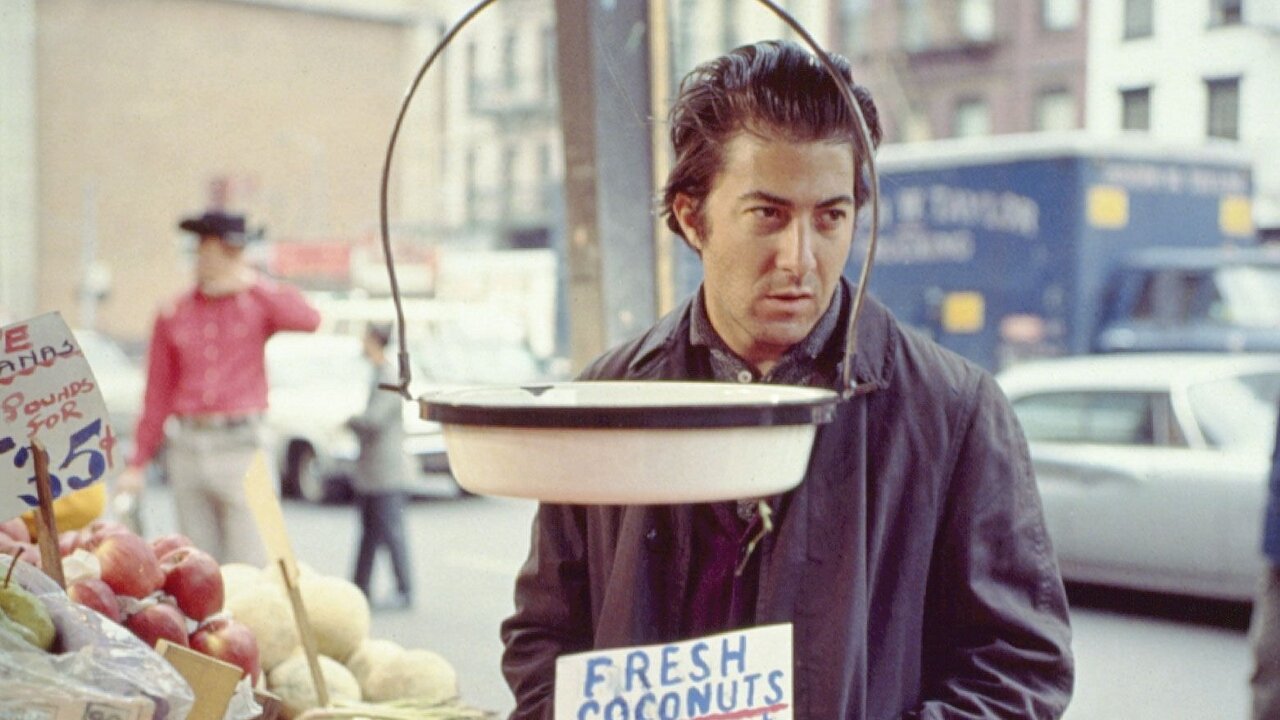
John Schlesinger’s X-rated Midnight Cowboy won the Oscar for Best Picture while other groundbreaking films such as Easy Rider, Last Summer, If…., Medium Cool, The Prime of Miss Jean Brodie, They Shoot Horses, Don’t They? , Oh! What a Lovely War, Paint Your Wagon, The Wild Bunch, Z, and The Damned made big impressions, not that you would know it from the Oscars aside from their selection for Best Picture and Director.
That Britisher Schlesinger’s Midnight Cowboy would win the Oscar seems like a no-brainer now, but at the time it seemed that a film about a naive male prostitute and his luckless friend navigating the seamier side of life in NYC had no chance of winning the big prize.
The other nominees included Anne of the Thousand Days, a stodgy film version of the 1948 Broadway play about Henry VIII and Anne Boleyn that was nowhere near the greatness of the sublime 1966 Oscar winner, A Man for All Seasons, that covered the same ground; Hello, Dolly! , an elaborate film version of the hit Broadway musical in which the middle-aged matchmaker is played by a miscast 28-year-old Barbra Streisand; and Z, a brilliant political thriller, that was going to win the Oscar for Best Foreign Film anyway making it an unlikely winner of the Best Picture prize. That left most pundits expecting that the award would go to Butch Cassidy and the Sundance Kid, a genial western pairing Paul Newman and Robert Redford for the first time.
Both the New York and the National Society of Film Critics had given their Best Picture award to Costa-Gavras’ Z while the National Board of Review gave their prize to They Shoot Horses, Don’t They? , Sydney Pollack’s film about a 1933 dance marathon at the height of the great depression that ended in several deaths.
There were no other major awards bodies until the Golden Globes, which nominated Anne of the Thousand Days, Butch Cassidy and the Sundance Kid, Midnight Cowboy, The Prime of Miss Jean Brodie, and They Shoot Horses, Don’t They for Best Picture – Drama and Cactus Flower, Goodbye, Columbus, Hello, Dolly! , Paint Your Wagon, and The Secret of Santa Vittora for Best Picture – Comedy or Musical.
Anne of the Thousand Days won for drama, reports claiming that it was because the Golden Globe voters were wined and dined by the film’s producers, while The Secret of Santa Vittoria, Stanley Kramer’s comedy set in Italy toward the end of World War II, won for comedy/musical.
The British Academy Awards nominated Midnight Cowboy; Richard Attenborough’s brilliant World War I musical, Oh! What a lovely War; Ken Russell’s controversial film of D. H. Lawrence’s Women in Love, a 1970 release in the U.S.; and Z.
The BAFTA went to Midnight Cowboy, which although filmed in the U.S., was directed by one of their own.
Best Actor went as expected to Hollywood veteran John Wayne for True Grit, a good western in which he plays an one-eyed Marshall, but nearly one as good as Sam Peckinpah’s violence driven The Wild Bunch or even George Roy Hill’s charming Butch Cassidy and the Sundance Kid.
Wayne may have been overdue, but Jon Voight and Dustin Hoffman were better in Midnight Cowboy as was Peter O’Toole as the dedicated Latin master in the musical remake of Goodbye, Mr. Chips. Only Richard Burton as Henry VIII in Anne of the Thousand Days seemed out of place in this lineup.
Best Actress, like Best Picture, was a surprise but only because Maggie Smith’s brilliant performance as the self-deluded Scottish schoolteacher was in a film that had been released early in the year while Jane Fonda’s equally brilliant performance as a suicidal marathon dance contestant in They Shoot Horses, Don’t They? was fresher in voters’ minds.
Liza Minnelli as a young eccentric in The Sterile Cuckoo, Jean Simmons as a recovering alcoholic in The Happy Ending, and Genevieve Bujold as Anne Boleyn in Anne of the Thousand Days were the other nominees.
Jack Nicholson was an early favorite for Best Supporting Actor for his breakthrough performance as the young lawyer in Easy Rider after winning both the New York and National Society of Film Critics’ awards but he ran into tough competition with veteran actor Gig Young as the nasty master of ceremonies in They Shoot Horses, Don’t They? at the Golden Globes which Young won. The two then became the main contenders for the Oscar which also went to Young.
The other nominees for Best Supporting Actor were Rupert Crosse as Steve McQueens buddy in The Reivers, Elliot Gould as the square husband in Bob & Carol & Ted & Alice, and Anthony Quayle as Cardinal Wolsey in Anne of the Thousand Days.
The early favorites for Best Supporting Actress were New York Film Critics winner Dyan Cannon as the square wife in Bob & Carol & Ted & Alice and Cathy Burns, a close runner-up in that race, as an awkward adolescent in Last Summer, but Golden Globe winner Goldie Hawn as dentist Walter Mathau’s mistress won instead for Cactus Flower.
The other nominees were Susannah York as Red Buttons dance partner in They Shoot Horses, Don’t They? and Sylvia Miles as a hooker Jon Voight mistook for a patron in Midnight Cowboy.
All films mentioned are available on home video.
Happy viewing.







Leave a Reply