
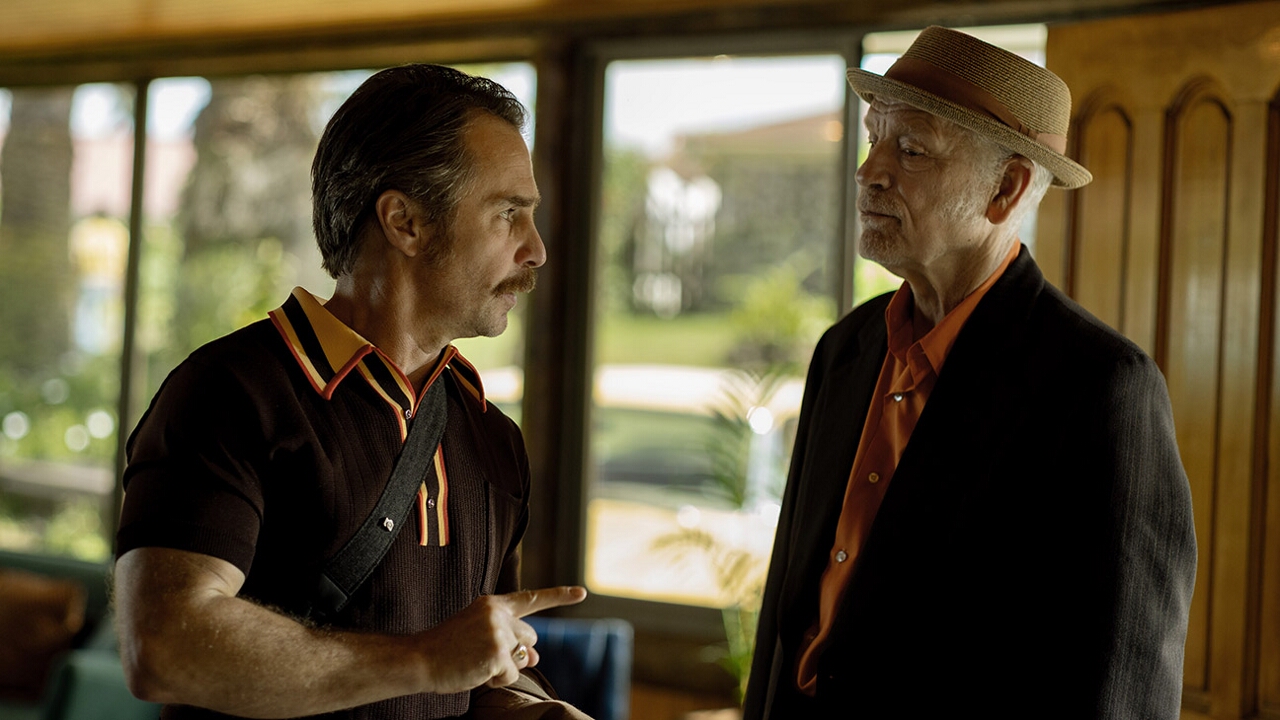
 At the just concluded 2026 Venice Film Festival, John Malkovich (Being John Malkovich) won the prestigious Volpe Cup for Best Actor for his portrayal of a dying FBI agent in Martin McDonagh’s Wild Horse Nine.
Malkovich could become the 17th winner of the award to receive an Oscar nomination for the same performance, and maybe even the third to win the Oscar for that performance. Only Fredric March, who was the recipient of the award at the festival’s first ceremony for Dr. Jekyll and Mr. Hyde in 1932, and Paul Muni who won the 1936 award for The Story of Louis Pasteur, went on to win Oscars for those performances.
Subsequent Volpe Cup winners to receive Oscar nominations for the same performance were Leslie Howard in Pygmalion, Sam Jaffe in The Asphalt Jungle, March again in Death of a Salesman, Anthony Franciosa in A Hatful of Rain, James Stewart in Anatomy of a Murder, Burt Lancaster in Birdman of Alcatraz, Albert Finney in Tom Jones, Javier Bardem in Before Night Falls, David Strathairn in Good Night, and Good Luck, Colin Firth in A Single Man, Philip Seymour Hoffman and Joaquin Phoenix in The Master, Willem Dafoe in At Eternity’s Gate, and Colin Farrell in The Banshees of Inisherin.
Other distinguished winners of the Volpe Cup for Best Actor include Wallace Beery in Viva Villa!, Joseph Cotten in Portrait of Jennie, Alec Guinness in The Horse’s Mouth, John Mills in Tunes of Glory, Toshiro Mifune in Yojimbo, Tom Courtenay in King and Country, Hugh Grant and James Wilby in Maurice, River Phoenix in My Own Private Idaho, Jack Lemmon in Glengarry Glen Ross, Liam Neeson in Michael Collins, Jim Broadbent in Topsy-Turvey, Sean Penn in 21 Grams, Ben Affleck in Hollywoodland, Brad Pitt in The Assassination of Jesse James by the Coward Robert Ford, and Michael Fassbender in Shame.
All these films are available on home video, although a few may be difficult to find.
A few highlights:
Rouben Mamoulian’s 1931 version of Dr. Jekyll and Mr. Hyde was the first talkie version of Robert Louis Stevenson’s oft-filmed novel. March is at his best as the good doctor turned madman, and Miriam Hopkins is equally brilliant as the tragic Ivy. The scenes in which March transforms from kindly Jekyll into evil Hyde are still a marvel to behold. March would go on to win a second Oscar for 1946’s The Best Years of Our Lives as well as a second Volpe Cup for 1951’s Death of a Salesman.
William Dietrle’s 1936 film, The Story of Louis Pasteur stands in the shadow of 1937’s Best Picture Oscar winner The Life of Emile Zola for which Dieterle would receive his only Oscar nomination and Muni would receive his fourth nomination after winning the NYFC award for his performance. This one for which Muni won the Volpe Cup and the Oscar, is, however, just as good with Muni outstanding as the devoted scientist.
The 1938 film of George Bernard Shaw’s Pygmalion, co-directed by Anthony Asquith and Leslie Howard, introduced audiences to Henry Higgins (Howard) and Eliza Dolittle (Wendy Hiller who was also nominated for an Oscar for her performance). Their characters were further immoralized by Rex Harrison and Julie Andrews in the 1956 stage version of the musical version, My Fair Lady, and Harrison and Audrey Hepburn in the musical’s Oscar-winning 1964 film version.
John Huston’s 1950 film, The Asphalt Jungle finally earned Sam Jaffe an Oscar nomination for playing a safecracker after denying him recognition for such earlier triumphs as Grand Duke Peter in The Scarlet Empress opposite Marlene Dietrich, the 200-year-old High Lama in Lost Horizon opposite Ronald Colman, and the title role of the water boy in the rousing Gunga Din opposite Cary Grant, Victor McLaglen, and Douglas Fairbanks, Jr. in the starring roles.
Otto Preminger’s 1959 film of Robert Travers’ bestselling novel, Anatomy of a Murder, provided James Stewart with his last Oscar nomination for one of his best performances as the wily defense attorney in a notorious rape case. He was supported by Lee Remick, Ben Gazzara, George C. Scott, Arthur O’Connell Eve Arden, and legendary defense attorney Joseph N. Welch in the Army-McCarthy hearings as the judge. Scott and O’Connell also received Oscar nominations for their performances.
Tony Richardson’s 1963 Oscar winner Tom Jones, based on Henry Fielding’s raucous 18th century novel, provided Albert Finney with the role of his career in the title role for which he received his first Oscar nomination as well as the Volpe Cup. Susannah York was equally splendid as his one true love as were Finney’s fellow Oscar nominees, Hugh Griffith, Edith Evans, Joyce Redman, and Diane Cilento and many others including Joan Greenwod, David Warner, Peter Bull and Richardson’s sister-in-law, Lynn Redgrave.
Julian Schnabel’s 2000 film, Before Night Falls for which Javier Bardem won the first of his two Volpe Cups, also won Schnabel two awards including a Grand Special Jury Prize. Bardem, who would win his second Volpe Cup for 2004’s The Sea Inside, was not the first to win the award for playing a gay character, Cuban poet and novelist Reinaldo Arenas, but would become the first to also be nominated for an Oscar. Previous Volpe Cup winners playing gay characters, Hugh Grant and James Wilby in Maurice, and River Phoenix in My Own Private Idaho, failed to receive Oscar nominations for those performances.
Tom Ford’s 2009 film, A Single Man became the second and last film to date for which Oscar nominated an actor for playing a gay character who was first recognized by the Venice Film Festival with a Volpe Cup. Julianne Moore, Nicholas Hoult, and Matthew Goode co-starred in the film from a Christopher Isherwood novel about an English professor in the 1960s unable to cope with life in Los Angeles after the death of his boyfriend. Firth would go on to win an Oscar for 2012’s The King’s Speech in which he played King George VI.
Martin McDonagh’s 2022 film, The Banshees of Inisherin was a wonderful piece of art that lost the Oscar for Best Picture, as predicted, to the box office phenomenon, Everything Everywhere All at Once. What wasn’t as predictable, however, was Colin Farrell’s loss of Best Actor to Brendan Fraser in The Whale. Both were in a tight race with Austin Butler in Elvis. The question now is will Malkovich, the second Volpe Cup winner for a Martin McDonagh film, win or lose at this year’s Oscars? Stay tuned.
Happy Viewing.















Leave a Reply