
 When there’s nothing new to delve into, I like to rewatch something from one of my favorite directors. That gives me plenty to watch.
My all-time favorite director is John Ford, the only four-time Oscar-winning director who was equally at home in message films, escapist westerns and an occasional comedy.
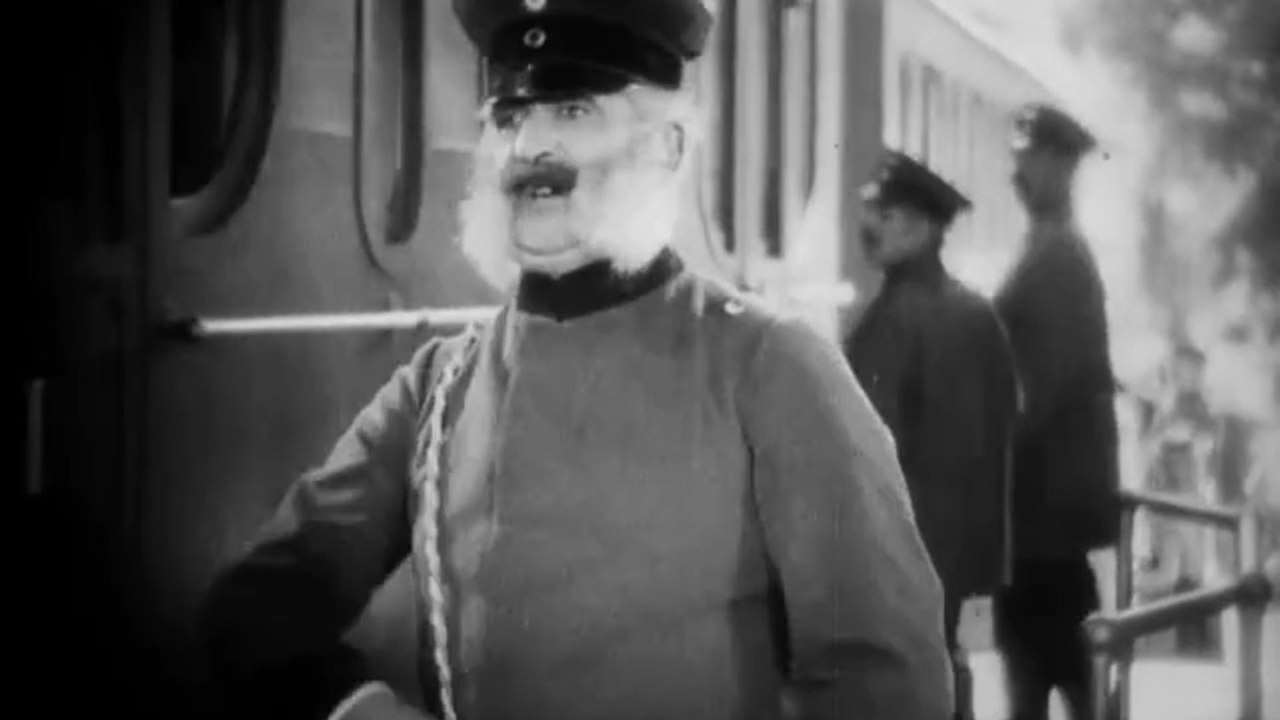
He began in westerns in the silent era, but it was his message films beginning with the 1928 silent classic, Four Sons, that drew me to his work. That film about a German mother who loses three sons to World War I and a fourth to America, was directly influenced by F.W. Murnau’s Sunrise and Frank Borzae’s 7th Heaven, both of which were filming on the Fox lot at the same time.
Ford continued in the same vein with 1933’s Pilgrimage starring stage great Henrietta Crosman as a despicable mother who uses her influence to have her only son drafted into the Army to prevent him from marrying a girl she didn’t approve of. After he is killed in France at the end of World War I, she becomes one of the first gold star mothers who courtesy of the U.S. government gets to go on a voyage to see where her son is buried. There she has an epiphany and returns home to make amends with her son’s girl and their son.
The first three films for which Ford won Oscar were also message films. 1935’s The Informer followed Irish rebel Victor McLaglen who turns his best friend (Wallace Ford) over to the British authorities in 1922 Ireland and then lives in terror as his friends turn to enemies. Una O’Connor as Ford’s mother is another of Ford’s indelible mother figures.
1940’s The Grapes of Wrath based on John Steinbeck’s monumental novel is about the plight of itinerant farm workers forced from their homes in the Oklahoma Dust Bowl to compete for work in California’s sun-drenched valleys. Henry Fonda as everyman Tom Joad and Jane Darwell as his mother, the indomitable Ma Joad, give the performances of their careers with strong support from John Carradine, Russell Simpson, John Qualen and many others.
1941’s How Green Was My Valley from the first half of Richard Llewelyn’s novel was specifically about the plight of Welsh coal miners but really about the plight of such workers everywhere. Walter Pidgeon and Maureen O’Hara were fine in the leads as the local minister and the only girl in a family of men who followed their father into the mines. Donald Crisp as the head of the family and Sara Allgood as the mother were the heart and soul of the film while Roddy McDowall made an auspicious American film debut as the family’s youngest son.
Ford returned to westerns with 1939’s Stagecoach which made a major star of John Wayne and won an Oscar for Thomas Mitchell. With time out for World War II, he returned in 1946 with the definitive Wyatt Earp/Doc Holliday western, My Darling Clementine with Henry Fonda and Victor Mature and from 1948-1950 gave us his acclaimed cavalry trilogy, Fort Apache, She Wore a Yellow Ribbon and Rio Grande which took him into 1950.
Ford won his fourth Oscar for the 1952 comedy, The Quiet Man filmed in Ireland with John Wayne as a retired U.S. prizefighter who returns to the old country where he falls in love with fiery colleen Maureen O’Hara. Barry Fitzgerald, Victor McLaglen, Mildred Natwick, and Ward Bond led an impressive supporting cast.
In 1955, Ford had two of his biggest hits with The Long Gray Line and Mister Roberts
The Long Gray Line starred Tyrone Power in one of his most appealing roles as Irish immigrant Marty Maher hired in 1898 as a civilian employee at West Point where, during a 50-year career, he rose to the rank of NCO and instructor. Maureen O’Hara had one of her best roles as Power’s wife, and the strong supporting cast included Donald Crisp as his father, Sean McClory as his brother, along with Robert Francis, Ward Bond, Betsy Palmer, Philip Carey, William Leslie, Harry Carey, Jr., and Patrick Wayne among many others.
Mister Roberts was based on the long-running Broadway play that kept Henry Fonda busy from the time he made his last film, Ford’s Fort Apache until he returned to Hollywood to make the film version along with James Cagney, William Powell (in his last film) and Jack Lemmon, who won a supporting Oscar for his performance.
Ford, however, had to withdraw from the film ostensibly due to health concerns and was replaced by Mervyn LeRoy. Rumors persisted, however, that Ford had been fired over clashes with Fonda on how certain scenes should be played. Fonda was said to be appalled by the amount of slapstick that Ford was injecting into the film.
Ford recovered quickly, giving John Wayne his greatest role in the 1956 western, The Searchers in which Wayne played a man searching for years for his kidnapped niece. When he finds her, will he bring her home or kill her for having become the squaw of her kidnapper? Jeffrey Hunter, Vera Miles, Natalie Wood, Ward Bond, John Qualen and Olive Carey are outstanding in support.
In 1958, Ford assembled one of the greatest casts of all time for his film of Edwin O’Connor’s The Last Hurrah toplining Spencer Tracy as the longtime mayor of a New England town (read Boston) running for reelection against strong opposition. The cast, made up mostly of Ford regulars, included Jeffrey Hunter, Pat O’Brien, James Gleason, Edward Brophy, Donald Crisp, Wallace Ford, Jane Darwell, Anna Lee and Ricardo Cortez among those on Tracy’s side with Basil Rathbone and John Carradine as the principal villains.
Ford continued to do interesting work into the 1960s, helming some very fine westerns including Sergeant Rutledge, Two Rode Together, The Man Who Shot Liberty Valance, and Cheyenne Autumn.
He began work in Ireland on 1965’s Young Cassidy but fell ill and was replaced by Jack Cardiff. Based on the autobiography of playwright Sean O’Casey, burly Rod Taylor did not resemble the diminutive O’Casey in the least, which may be the reason his name was changed for the film which included such strong players as Maggie Smith, Julie Christie, Edith Evans, and Flora Robson.
Back in the U.S., Ford’s last film was 1966’s 7 Women set in 1935 Chian but filmed on the MGM lot with Anne Bancroft as a feisty doctor in opposition to strait-laced missionary Margaret Leighton, supported by Sue Lyon, Flora Robson, Mildred Dunnock, Betty Field, Eddie Albert, and Woody Strode.
Ford died in 1973.
Happy Viewing










Leave a Reply