
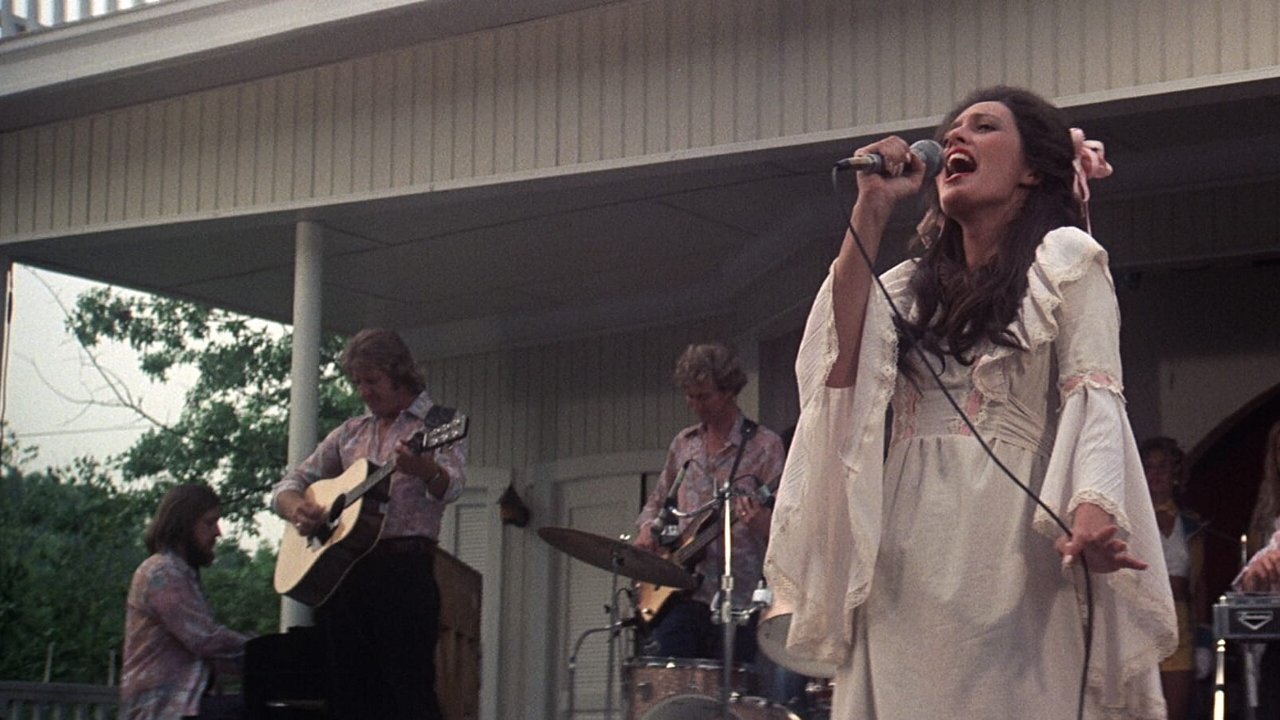
Nashville
Rating

Director
Robert Altman
Screenplay
Joan Tewkesbury
Length
2h 40m
Starring
David Arkin, Barbara Baxley, Ned Beatty, Karen Black, Ronee Blakley, Timothy Brown, Keith Carradine, Geraldine Chaplin, Robert Doqui, Shelley Duvall, Allen Garfield, Henry Gibson, Scott Glenn, Jeff Goldblum, Barbara Harris, David Hayward, Michael Murphy, Allan Nicholls, Dave Peel, Cristina Raines, Bert Remsen, Lily Tomlin, Gwen Welles, Keenan Wynn, James Dan Calvert, Donna Denton, Merle Kilgore, Carol McGinnis, Sheila Bailey, Patti Bryan, Richard Baskin, Jonnie Barnett, Vassar Clements, Misty Mountain Boys, Sue Barton, Elliott Gould, Julie Christie
MPAA Rating
R
Review
Like Hollywood, Nashville is a place where dreams can come true. There, as the titular film highlights, dreams can be realized or frustrated and we get an intriguing look into a handful of people, veterans and newcomers alike, as they try to succeed against all odds.
Robert Altman’s films are always filled with immense talent doing their best work and Nashville is no different. With so many stories unfolding at one time, it could be difficult to keep track of them if Altman weren’t such a master at juggling multiple narratives. Against the backdrop of an incoming presidential campaign, an array of compelling figures go about their lives trying to win at any cost.
Altman’s style of humor is often quirky, frequently dark, and seldom laugh-out-loud funny. Yet, Nashville hits on all three styles with equal success. It also wouldn’t be an Altman film if there weren’t subtle political observations throughout. Like MASH, Nashville doesn’t outright espouse a viewpoint but the intent is evident. The cultural and political turmoil of the 1970s is handled with care and finesse without feeling preachy or excessive. The narrative structure is held together with the framing device of a fictional presidential candidate spewing his rhetoric through his canvassing van’s loudspeakers. He’s never seen, but his presence is felt, frequently punctuating the action going on onscreen without feeling like a driving force in the film. It’s in these underpinning moments where the film feels alive and biting in its critiques.
Everyone in the film delivers a terrific performance. The most notable for me were Henry Gibson as a self-centered, big-name country star; Lily Tomlin as a gospel singer and mother of two deaf children; and Ronee Blakely as a fading country star who’s been in and out of hospitals. And despite the more than two dozen characters, their stories are all handled capably. The film never flinches from honest conversations and while you can pick up a sense of foreshadowing on occasion, the finale still resonates long after the film is over.
Nashville may not seem like a film with modern salience, but with political corruption, international conflict, and genuine disrespect for those who are different from the mainstream, we aren’t as far removed from that tumultuous era as some of us would like. The Nixonian era is alive and well just going under a different name and angling for a far worse outcome. That’s why this film carries such importance in a historical context.
Review Written
June 17, 2025
















Leave a Reply