
 U.S. Elections of 1946 took place on November 5, 1946. It was the first election after World War II. Voters elected the members of the 80th United States Congress in which Democrats who had been in the majority since 1932, suffered large losses to the Republicans in both houses. Now 80 years later, after decades of highs and lows for both parties, it appears likely that the Democrats will gain control of both houses from the Republicans.
Things were changing in national politics in 1946, but what was happening at the movies where change was usually slower but not this year in which William Wyler’s The Best Years of Our Lives, Frank Capra’s It’s a Wonderful Life, and Edmund Goulding’s The Razor’s Edge all opened in the week before Christmas in New York and went on to Best Picture Oscar nominations among numerous other awards.
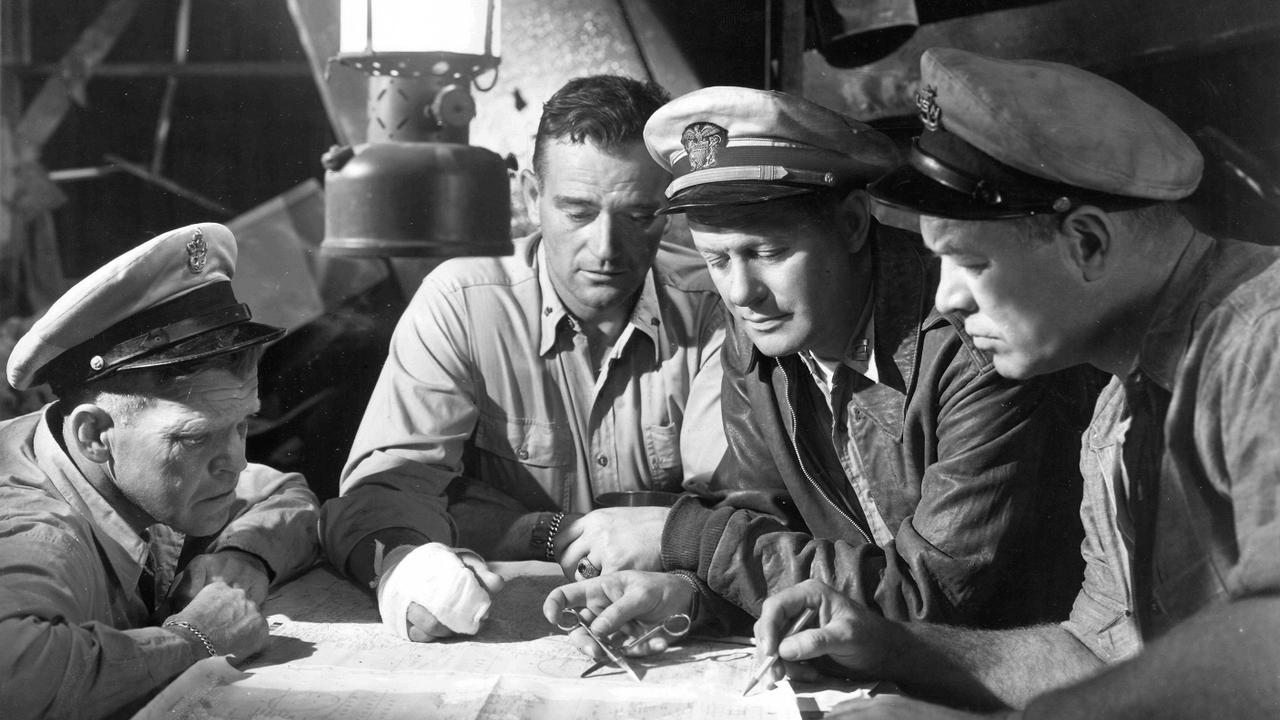
During the war years, films about the war were mostly glorifications of U.S. military forces. It wasn’t until late 1945 and early 1946 with the releases of Ford’s They Were Expendable, William Wellman’s The Story of G.I. Joe, and Lewis Milestone’s A Walk in the Sun, that films of the genre became more realistic. Released in early 1946 in the U.S. was Roberto Rossellini’s Rome, Open City depicting life in fascist Italy toward the end of the war.
Hollywood offered its share of escapist films, the best of which included Clarence Brown’s film of Marjorie Kinnan Rawlings’ The Yearling with Gregory Peck, Jane Wyman and Claude Jarman, Jr., which was also Oscar nominated for Best Picture; John Cromwell’s film of Margaret Landon’s biographical Anna ant the King of Siam with Irene Dunne and Rex Harrison; Victor Saville’s film of A.J. Cronin’s The Green Years with Charles Coburn, Dean Stockwell, Tom Drake, Hume Cronyn, Jessica Tandy, and Gladys Cooper; Mitchell Leisen’s To Each His Own with Olivia de Havilland, John Lund, and Roland Culver; and Alfred E, Green’s The Jolson Story with Al Jolson himself supplying the singing voice of Larry Parks.
The year also saw the release of some of Hollywood’s greatest suspense classics including Alfred Hitchcock’s Notorious with Ingrid Bergman, Cary Grant, and Claude Rains; Howard Hawks; The Big Sleep with Humphrey Bogart and Lauren Bacall; Robert Siodmak’s The Killers with Burt Lancaster and Ava Gardner and The Spiral Staircase with Dorothy McGuire, George Brent, and Ethel Barrymore; Charles Vidor’s Gilda with Rita Hayworth and Glenn Ford; and Tay Garnett’s The Postman Always Rings Twice with Lana Turner and John Garfield.
Films from outside the U.S. began to be seen for the first time since the entry of the U.S> in the war at the end of 1941, with the release, not only of Italy’s Rome, Open City, but also
Michale Carné’s Children of Paradise from France and Laurence Olivier’s Henry V, the year’s fifth Best Picture Osca nominee, and David Lean’s Brief Encounter from the United Kingdom. 1947 and 1948 would see the release, not just of contemporary releases from overseas, but many of the films that were released in their home countries during the war and even prior to that from Marcel Pagnol’s Marseilles Trilogy (Marius/Fanny/César) to Jean Cocteau’s Beauty and the Beast. Only films from Japan took longer to reach the U.S.
While there were terrific releases throughout the year, it was those last three films released in New York the week before Christmas, two of which are still considered among the greatest of all time.
Wyler’s The Best Years of Our Lives was the director’s first narrative film since 1942’s Mrs. Miniver, the film that Winston Chruchill credited with doing more for the war effort than a flotilla of destroyers. A classic of life in Britain at the beginning of the war, it was nominated for 12 Oscars. It won 6 including those for Best Picture, Director, Actress (Greer Garson in the title role) and Supporting Actress (Teresa Wright as Garson’s daughter-in-law). It had been the first film nominated for five acting performances with additional nominations going to Walter Pidgeon as Garson’s husband, Henry Travers as the local stationmaster, and Dame May Whitty as Wright’s grandmother, the town matriarch.
During the war, Wyler director the classic documentaries, The Memphis Belle and The Fighting Lady.
The Best Years of Our Lives dealt with the problems faced by three returning American servicemen from the same town after the war. They include Army Sergeant Fredric March who returns to his job at the local bank, Dana Andrews as a flyer whose employer refuses to take him back, and Harold Russell as a disabled sailor.
Nominated for 10 Oscars, it won 7 plus an honorary award for Howard Russell who also won for Best Supporting Actor along with the film for Best Picture, Wyler for Best Director, and March for Best Actor, among other awards. Curiously, no other actors were nominated although almost everyone agrees that Dana Andrews, Myrna Loy as March’s wife, and Teresa Wrigth as March’s daughter, should also have been nominated. Virginia Mayo as Andrews; faithless wife and Cathy O’Donnell as Russell’s faithful fiancé also merited consideration.
Capra’s It’s a Wonderful Life explores themes already evident in such previous works as Mr. Deeds Goes to Town, Mr. Smith Goes to Washington, and Meet John Doe, but although liked well enough at the time, has grown in acceptance over the years, thanks largely to Capra forgetting to renew the film’s copyright, subjecting it constant TV showings at Christmas time beginning in the early 1970. It’s now, of course, better known The Best Years of Our Lives and even in some circles to be the better two films.
Nominated for 5 Oscars including Best Actor James Stewart, Stewart heads an impeccable cast as the smalltown man attempting suicide on Christmas Eve who is shown by his guardian angel (Henry Travers) what everyone else’s life would be like if he hadn’t been there. Although Stewart was nominated, voters passed on Donna Reed as his wife, Lionel Barrymore as the town’s nasty banker, and Travers as well as Thomas Mitchell, Beulah Bondi and other stalwarts in the supporting cast.
Goulding’s The Razor’s Edge, based on the novel by W. Somerset Maugham, has not retained its original reputation but is still worth seeking out for the performances of Tyrone Power as the well-to-do Chicagoan, who after spending ten years trying to find himself, finds former love Gene Tierney living in Paris with, Oscar nominee Clifton Webb as her social climbing uncle. Together they find old friend Oscar winner Anne Baxter who Power tries to help after discovering that she has turned to alcohol and prostitution following the death of her husband and young son.
All films mentioned have been released on home video at one time or another, although To Each His Own has oddly never been released on DVD or Blu-ray in the U.S.. The Best Years of Our Lives is currently streaming on HBO Max and It’s a Wonderful Life will undoubtedly be turning up everywhere at Christmas time.
Happy Viewing.




















Leave a Reply