
 Home viewing grows ever more difficult as time goes on. Streaming services may offer the opportunity to see something good, but often their choices are packed with numbingly stupid rom-coms and long, involved mini-series that may start out well but frequently end in an “is that all there is?” blur.
The best solution for film buffs is their old, reliable home library of DVDs and Blu-rays. Most new theatrical releases eventually find their way to physical media, but trying to find classic films made prior to 2000 becomes more difficult with each passing year. Fortunately, there are still a few increasingly boutique labels that release remastered versions of old films that aren’t necessarily blockbusters.
Warner Brothers, through their Archive, which owns classic Warner Bros., MGM, and RKO films, Universal which owns most pre-1950 Paramount films, and more recently, Paramount itself have released films through Kino Lorber and Via Vision’s Imprint label which releases region-free Blu-rays from New Zealand. The problem with the latter is that Trump’s tariffs have driven up prices so high that many of the distributers won’t touch them, instead partnering with the manufacturer to ship them to you at cost plus import fees.
Occasionally you can find a distributer on e-bay that has in-stock Imprint titles to sell and ship from their U.S. location at a reasonable price. However, their supplies are limited so if you want a Blu-ray edition of a film only available on Imprint, you must act fast. Such is the case with Oh! What a Lovely War which I got my hands on quicker than I was able do with other films I recently ordered from Amazon and Warner Archive.
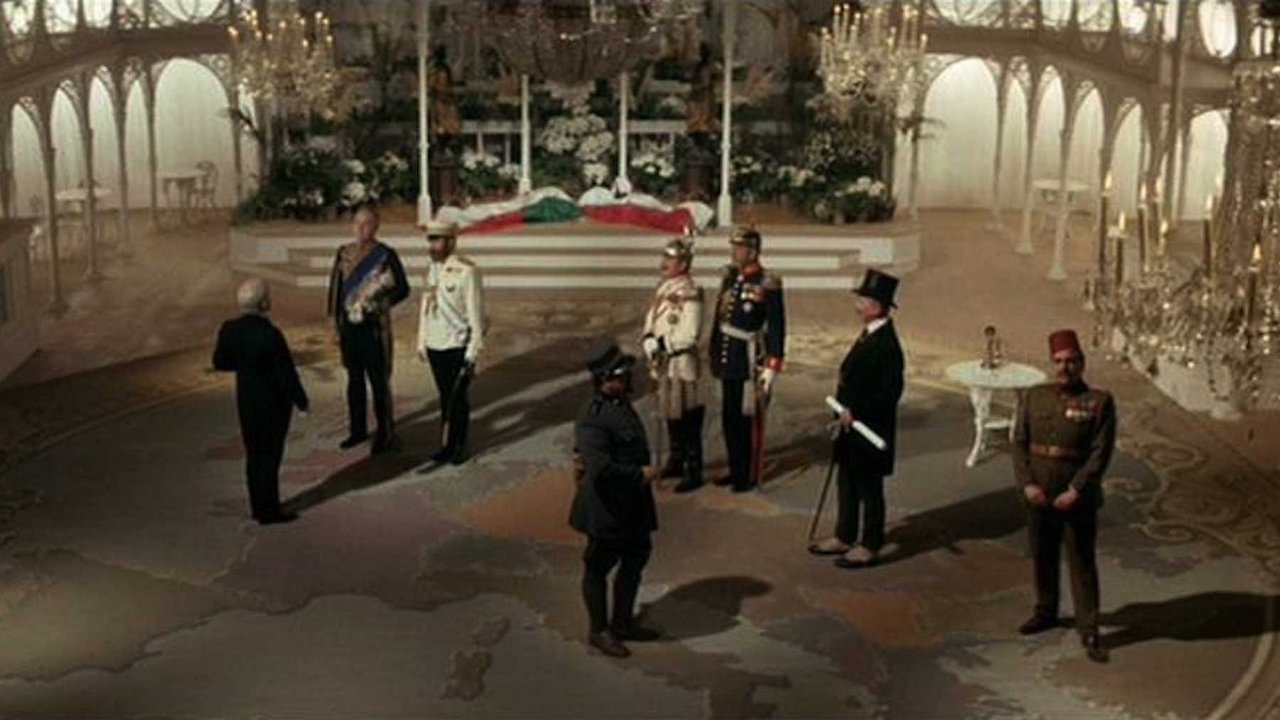
Imprint’s newly released Blu-ray edition of Oh! What a Lovely War is pure joy.
The film was one of three in contention for the New York Film Critics’ 1969 awards, coming in second to Costa-Gavras’ Z just ahead of Luchino Visconti’s The Damned while Midnight Cowboy had to settle for Best Actor for Jon Voight and They Shoot Horses, Don’t They? for Best Actress for Jane Fonda.
Fonda’s only two competitors were both among the standout stars of Oh! What a Lovely War although their nominations were for other films, Maggie Smith for The Prime of Miss Jean Brodie and Vanessa Redgrave for The Loves of Isadora. Redgrave originated the role of Jean Brodie in the London production of the play, the film of which would soon win Smith her first Oscar.
Oh! What a Lovely War was nominated for 10 BAFA awards including Best Picture and Director (Richard Attenborough). It won 6 including one for Best Supporting Actor (Laurence Olivier). Attenborough also was one of ten DGA nominees for the Best Director.
The film version of Joan Littlewood’s London and Broadway stage musical is an elaborately expanded version of the intimate showcase it was on stage.
Attenborough made his film debut as an actor in 1942’s In Which We Serve but wasn’t generally well known to American audiences until 1963’s The Great Escape after which he continued to stand out in such films as 1964’s Séance on a Wet Afternoon, 1965’s The Flight of the Phoenix, 1966’s The Sand Pebbles, and 1967’s Doctor Dolittle. Oh! What a Lovely War was his first film as a director.
The film explores the madness of World War I from several perspectives, that of the ineptitude of the politicians and senior Army officers, the horrendous conditions suffered by the foot soldiers, and the women left behind by the deaths of the soldiers. It is told in a combination of skits involving the politicians and senior officers, the battlefield reality of the foot soldiers, and the sad reflections of the surviving family members of 1,350,000 British soldiers and civilians killed in the war.
Featured throughout the film are the well-known songs of the day, from the rousing “It’s a Long Way to Tipperary” to the sentimental “Keep the Home Fires Burning” to the raucous “Belgium Put the Kibosh on the Kaiser” to the delightfully naughty “I’ll Make a Man of You” to the ironic parodies actually sung by the soldiers of the day, ending with “I’ll Never Tell Them”, the haunting parody of “They Didn’t Believe Me”.
Top billed in the credits are the actors who played members of the fictional Smith family led by BAFTA Best Supporting Actress nominee Mary Wimbush who over the course of the film loses all five of her grown sons played by Corin Redgrave, (the other) Colin Farrell, Maurice Roeves, Malcolm McFee, and Paul Shelley.
The politicians and senior Army officers are played by the likes of John Mills, Laurence Olivier, Ralph Richardson, John Gielgud, and Michael Redgrave.
Maggie Smith all but steals the film as the seductive music hall star who sings the double-entendre recruiting song, “I’ll Make a Man of You” as audience members join her on stage to enlist, revealing in closeup her ghastly, almost ghoulish makeup.
Vanessa Redgrave is also outstanding as feminist activist Sylvia Pankhurst who delivers an impassioned anti-war speech that falls on deaf ears.
The films’ most memorable battlefield scene is the Christmas Day Truce in which British and German soldiers threw down their weapons and exchanged schnapps and cigarettes in the fields between their trenches.
The final scene involved the placing of over 16,000 individual crosses on the Sussex Downs. Each cross had to have a hole dug for it to hold steady in the ground to stop it from falling or being blown over.
The Imprint release includes a separate disc of extras including an interview with actress Wendy Allnut who was top billed alphabetically as one of the female members of the Smith family.
Also recently released from Imprint and equally difficult to find are 1941’s Ladies in Retirement and 1960’s Heller in Pink Tights.
Happy Viewing


















Leave a Reply