
All the Empty Rooms (Short Film)
Rating

Director
Joshua Seftel
Screenplay
n/a
Length
34m
Starring
n/a
MPAA Rating
Not Rated
Review
Although the program organizes these in a different order, I’ll be tackling them alphabetically, not in order of presentation or preference.
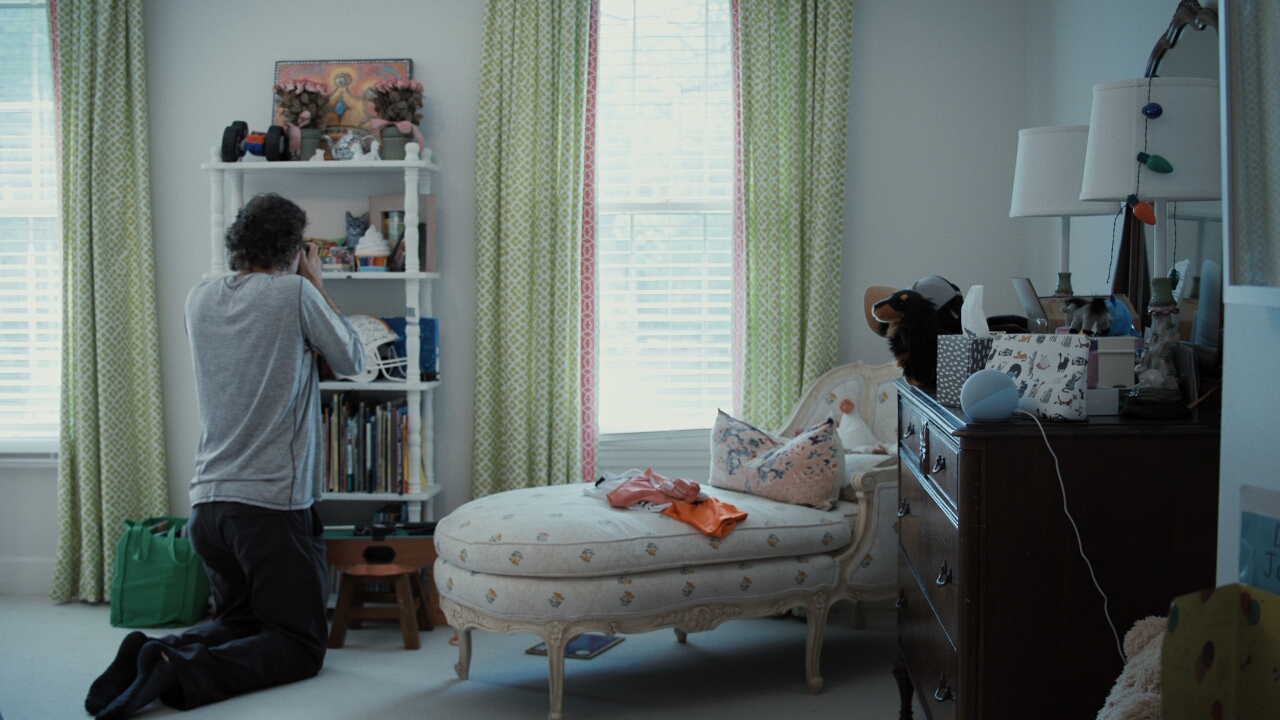
All the Empty Rooms follows news correspondent Steve Hartman, whose claims to fame are feel good human interest stories, and photographer Lou Bopp as they reach the end of a long journey of documenting the untouched rooms of school shooting victims. The film includes conversations with four sets of parents whose children were taken far too early. The children represent the mass shootings at three different schools around the country: Saugus High School in Santa Clarita, Calif. in 2019, Robb Elementary School in Uvalde, Tex. in 2022, and Covenant School in Nashville, Tenn. in 2023.
Although the short covers only four of the victims, it is made clear that this arduous task has been taxing for Steve with numerous others visited before the documentary begins. Although viewers will struggle to keep back the tears, the selection of still images paired with live interviews and numerous shots of these empty bedrooms hammers home the horrors of school shootings and what parents and siblings have to deal with in the absence of their cherished loved one.
Whatever your take on the proliferation of guns in America, the documentary entirely avoids talking about gun control, a topic that allows the viewer to take sides without considering the victims. By avoiding the subject matter, it lets kids voices and images recorded before their deaths affect the viewer without judgment. Although it’s easy to believe the film takes a poignant stance on gun control, its focus on just a few of the children who’ve lost their lives has the desired impact, one that brings tears and hardens the resolve of anti-gun advocates while simultaneously reaching into the hearts of pro-second amendment voters who haven’t made the stance the entire part of their identities.
If there’s one drawback it’s the insertion of Hartman into the narrative. Rather than being an impartial observer of events, he makes himself the sole focus. It’s an odd dichotomy between reporter who finally tackles a story with raw emotions and a story that needs room to breathe. The two sides could easily have been split into companion documentaries with an impartial look at the victims and one that explored Hartman’s career marking this as a capstone. The photos of his daughter through the years might add some measure of “I know what these parents probably went through” but feels out of place in the rest of the documentary. The end result is still powerful even if it isn’t the best of the bunch, it’s still a potent story that could probably be better flushed out in a feature length effort.
Review Written
February 12, 2026

Armed Only with a Camera: The Life and Death of Brent Renaud (Short Film)
Rating

Director
Brent Renaud, Craig Renaud
Screenplay
n/a
Length
37m
Starring
n/a
MPAA Rating
Not Rated
Review
Brent Renaud was a prominent photojournalist and war correspondent for the New York Times. Getting into the trenches with soldiers, following asylum seekers as they cross great swaths of land to find the American Dream, and exploring the aftermath of disasters, both natural and manmade, Renaud was a passionate and dedicated journalist looking for answers and striving to bring the lives of the affected to American viewers/readers in an effort to highlight the death and maltreatment of people around the world.
After his unprovoked execution by Russian soldiers in the streets of Ukraine, his brother Craig embarked on a journey to document his brother’s work and convey the very real danger journalists face in a world hostile to news that is antithetical to their cause. War correspondents have long faced hostility bringing the truth to the public but the increasing attacks on them by major world governments, including the United States, further endangers their lives and devalues their lives but increases the importance of their work. It isn’t spelled out exactly this way in the film but the framework is there to come to the obvious conclusion.
The documentary blends past reporting by Brent Renaud with new footage of Renaud’s post-mortem journey from a small house Ukraine to his funeral in Arkansas. There are many affecting moments throughout the short film as we feel the agony of the various figures Renaud documented over his years as a journalist but there are just as many moments of sorrow in the depiction of his return to the United States, most notably the arrival of the flag-draped casket. Renaud’s tragic death is impactful but never maudlin. It’s honest and visceral, never shying away from horrors the audience might not be ready to face. It’s necessary and makes its point succinctly even if the final words of the film are displayed on the screen rather than spoken directly to the viewer.
Review Written
February 12, 2026

Children No More: “Were and Are Gone” (Short Film)
Rating
Director
Hilla Medalia
Screenplay
n/a
Length
36m
Starring
n/a
MPAA Rating
Not Rated
Review
From school shooting victims to the assault on journalists, this year’s documentary shorts are a somber affair. For Children No More, director Hilla Medalia takes viewers into Israel where a group of Israeli citizens stage silent vigils for the Palestinian children who are being killed by Israeli bombings in the West Bank, Gaza, and elsewhere. Protesters are used to chanting slogans and making their presence large believing it to be the best way to make an impact but in these protests, that is not the case.
Here, the protest is entirely silent with Israelis standing or sitting along the street holding up pictures of the dead. Not images of their bodies but which can be easy to turn away from. Instead they use photos of their faces before their lives were taken. It’s difficult to look away from a smiling face who, as the subtitle (and slogan of the protestors) says, “were and are gone.” It’s a powerful way to showcase the disturbing reality for children in the middle east. We are also frequently shown images of a banner listing how many kids have died due to Israeli action. The number increases as the production plays on highlighting just how frequently these types of deaths occur.
We get a behind-the-scenes look at organizers and their approach to the protest, explaining why they use the methods they do. Silence is strongly encouraged, not even to counter the flippant and disturbing disregard passers-by sometimes engage in. It’s clear this issue has torn the people of Israel. What might have helped the film have more impacting is documenting just how many hostages were in place, since that seems to be the main concern of the anti-Palestinian factions in Israel. If that’s too combative, they could have done more to highlight how people who want to preserve the lives of Palestinian children can also hope for the safe return of Hamas hostages. Either way, it diminishes the disingenuity of the pro-hostage arguments. Why do they want innocent children to die just to bring home hostages?
The film could have used some trimming as after a while the message becomes less salient. Highlighting several of the faces on poster board throughout the film is an important and poignant statement on the theme but even for those who are in agreement with the group’s (and the documentary’s) aims, it overwhelms pretty quickly and what starts out as emotional turbulence fades to a dull ache. It’s an important film for people to see, just to put a face to the names of the dead and to highlight that this is only the number of dead children and does not include all of the adults who’ve also been affected. It will be a strong time capsule of the darkest days of the war and subsequent tensions in Israel even if it doesn’t have quite the resonance of the other statement films in the program.
Review Written
February 12, 2026

The Devil Is Busy (Short Film)
Rating
Director
Geeta Gandbhir, Christalyn Hampton
Screenplay
n/a
Length
31m
Starring
n/a
MPAA Rating
Not Rated
Review
The last of the emotionally resonant titles on this list is also the best. The Devil Is Busy takes viewers into a Georgian abortion clinic where we’re given time with the conscientious people who work there. It’s a day in the life of these brave souls who can’t help but fear an assassin taking vengeance in the name of God.
Explained to the audience, the clinic’s staff advise their procedures not just to protect themselves but the women who seek their help. It discusses the onerous nature of the law in Georgia and the heart-rending restrictions placed on them. The viewer comes to understand what a challenge this type of work faces physically, emotionally, and spiritually. They face their day with courage and hope that what little help they can provide will save someone’s life. From the clinic’s manager to its doctors, we learn directly from them the difficulties they face day in and day out.
One particularly potent moment watches as the phone bank operator has to tell a young woman that the clinic can’t serve them because she’s only a few days outside the strict window for abortions allowance in Georgia. The victims are never given face, we simply see that they are numerous suggesting a dire problem facing Georgian women and by extension many women in many other states as well that entirely outlaw the practice. Not avoiding the opposition, there are scenes where protestors are allowed to stand on camera spouting their propaganda while we’re left to wonder how the clinic’s employees can face the daily barrage of hypocritical stances these protestors take.
In the prior four entries, the events are painfully present, images of the dead put forth as evidence of their existence. Here, the audience is left to wonder how we can allow something like this to happen in the United States where women are treated like numbers to fit into a spreadsheet rather than people who are facing one of the most difficult and often heart-rending choices anyone can make.
Review Written
February 12, 2026

Perfectly a Strangeness (Short Film)
Rating

Director
Alison McAlpine
Screenplay
Alison McAlpine
Length
15m
Starring
n/a
MPAA Rating
Not Rated
Review
In the description of this documentary, it’s said that the location is an abandoned astronomical observatory that serves as the backdrop for the film. In reality, it’s primarily filmed at the La Silla Observatory on the outskirts of the Atacama Desert in northern Chile, South America. That’s a strike against the film since it’s in the documentary category.
Filmed over a 24-hour period from sunrise to sunrise, it’s framed by three goats meandering about the locale. The images of the night sky are beautiful and are probably the reason this particular documentary was nominated but make no mistake, there is almost no underlying concept the documentary is revealing information about. The observatory comes alive at night with telescopes moving into position to capture a segment of the night sky and space beyond. The observatory, characterized by being far removed from light pollution and thus given an almost unrestricted look at the sky, is very clearly still in operation. While it could be considered abandoned because it appears no one physically works there, there’s no question that it’s still actively operating.
There’s a certain point to documentaries presenting information to the audience that they might be unfamiliar with and Perfectly a Strangeness definitely has some gorgeous photography but other than being an interesting little snippet that could be shown in a High School science class, what purpose does it have being nominated for an Oscar? This is probably the least impactful and undeserving documentary short nominee I’ve seen in quite some time. Pretty but vacuous, just like the space it views from a distance.
Review Written
February 12, 2026
















Leave a Reply