
Hamnet
Rating

Director
Chloé Zhao
Screenplay
Chloé Zhao, Maggie O’Farrell
Length
2h 05m
Starring
Jessie Buckley, Paul Mescal, Joe Alwyn, Emily Watson, Jacobi Jupe, David Wilmot, Olivia Lynes, Bodhi Rae Breathnach, Freya Hannan-Mills, Dainton Anderson, Elliot Baxter, Noah Jupe, El Simons, Louisa Harland, Jack Shalloo, Sam Woolf, Hera Gibson
MPAA Rating
PG-13
Original Preview
Review
With a poet’s heart, Hamnet takes audiences to Elizabethan England to explore universal themes of grief and sorrow against a backdrop of Shakespearean dimension.
William Shakespeare is a figure of near monolithic stature. His legendary plays act as a foundation for a large portion of modern literary and theatrical institutions. His plays, both tragedy and comedy, have been adapted in various forms over the years with works like Romeo and Juliet, King Lear, Hamlet, and myriad others frequently adapted and emulated. The latter of these productions acts as the framing device for director Chloé Zhao’s fifth feature film which she adapts from the novel of the same name by Maggie O’Farrell who co-wrote the screenplay.
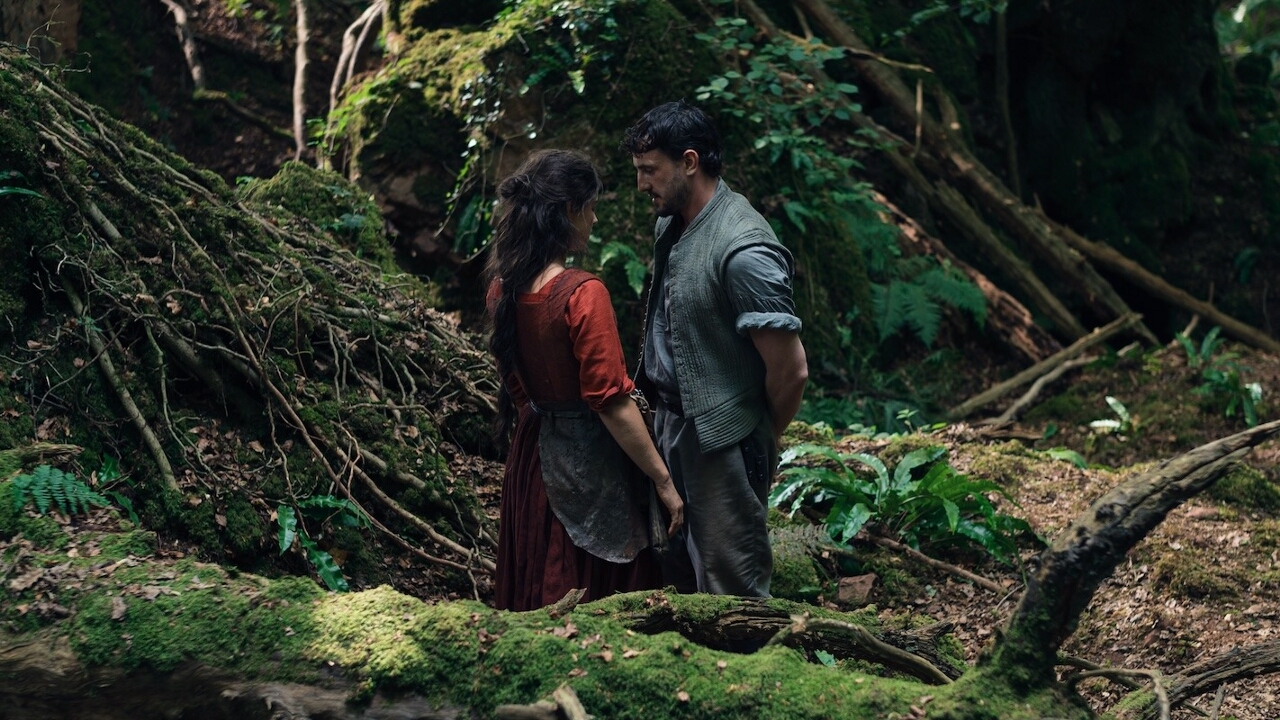
The film tells the story of the courtship, marriage, and life of Shakespeare (Paul Mescal) and his wife Agnes (Jessie Buckley). Through Buckley, Agnes’s primal nature and deeply felt emotions come across beautifully, presenting a rich character whose own childhood and early life informs her approach to naturalistic motherhood and forest spiritualism. Her passions are a core part of her essence. Mescal, for his part, plays the Bard of Avon as an intelligent sometimes fanciful father whose restlessness in their small village becomes a wedge between them.
Although Will has moved to London to pursue a successful career in theater, Agnes’s insistence on remaining in their more rural home creates friction between them. The tragic events surrounding the death of his 11-year-old son Hamnet (Jacobi Jupe whose brother Noah plays a pivotal role in the film as well) creates a rift of recrimination, anger, and sadness, threatening to destroy their relationship. In the aftermath of Hamnet’s death, Will writes the play Hamlet and encourages his wife to come witness the tale. Despite their marital issues, she agrees and it’s there that both of them learn something more about how each of them processes grief.
Buckley’s performance is transcendental. She crafts her character superbly and holds the audience’s attention throughout, building to the emotional climax of the film, a quiet display of grief and catharsis. Although Mescal is off-screen for seemingly large swaths of the film, his reactions are often included with brief cutaways that show viewers that he suffers more quietly than his wife even though she wishes he were more expressive with his feelings. Emily Watson is solid as Will’s mother Mary and Joe Alwyn does well in his brief appearances as Agnes’s brother Bartholomew.
Additionally, special attention should be paid to Jupe (Jacobi) in a brilliant turn as young Hamnet. While the early childhood scenes are well laid out, it’s the film’s later moments, such as when he’s comforting his sister while she struggles to survive the plague, that stick in the memory. His cherubic face conveys a wealth and depth of emotion that most young actors struggle to convey. These moments feel natural and human.
Zhao’s subtlety as a filmmaker helps Hamnet breathe in exciting and fresh ways. The film may run just over two hours but oftentimes it breezes past despite long takes and static shots that under less skilled guidance could feel like eternity. It helps that she’s working with tremendous actors. Buckley, delivering her career-defining performance alongside Mescal and Jupe (Jacobi), helps to alleviate the burden such scenes can often become. Aiding her work is cinematographer Łukasz Żal who often shoots these scenes like a painter of the Elizabethan period setting the balance of the frame to pull the attention of the viewer. Add in a lovely and emotional underscore by Max Richter and you have a movie that feels as much like a work of art crafted for the big screen as any picture in the last decade has.
When examining grief, it’s important to look at how different people approach it. Agnes has no trouble expressing hers loudly and without shame while Will presents a more stoic but no less injured face to the outside world, using his pen to infuse his work with those emotions. Hamnet doesn’t shy away from either depiction nor how those differing approaches can create strife in a relationship between two passionate people who react in diametrically opposed ways. Even for those who’ve had limited experience with loss, the film allows them to process the complexity of these feelings with a cathartic denouement that resonates long after they’ve left the theater.
Review Written
February 4, 2026

















Leave a Reply