
HellBent
Rating

Director
Paul Etheredge-Ouzts
Screenplay
Paul Etheredge-Ouzts
Length
1h 24m
Starring
Dylan Fergus, Bryan Kirkwood, Hank Harris, Andrew Levitas, Matt Phillips, Nick Name, Wren T. Brown, Nina Landey, Samuel Aarons
MPAA Rating
R
Review
One of the elements of horror in the 1980’s that was so appealing was the simple, dramatic effects employed to convey the utmost terror without having to resort to visual effects technology. HellBent takes many of the best elements of that period’s horror milestones and weaves them into the first slasher feature with gay protagonists.
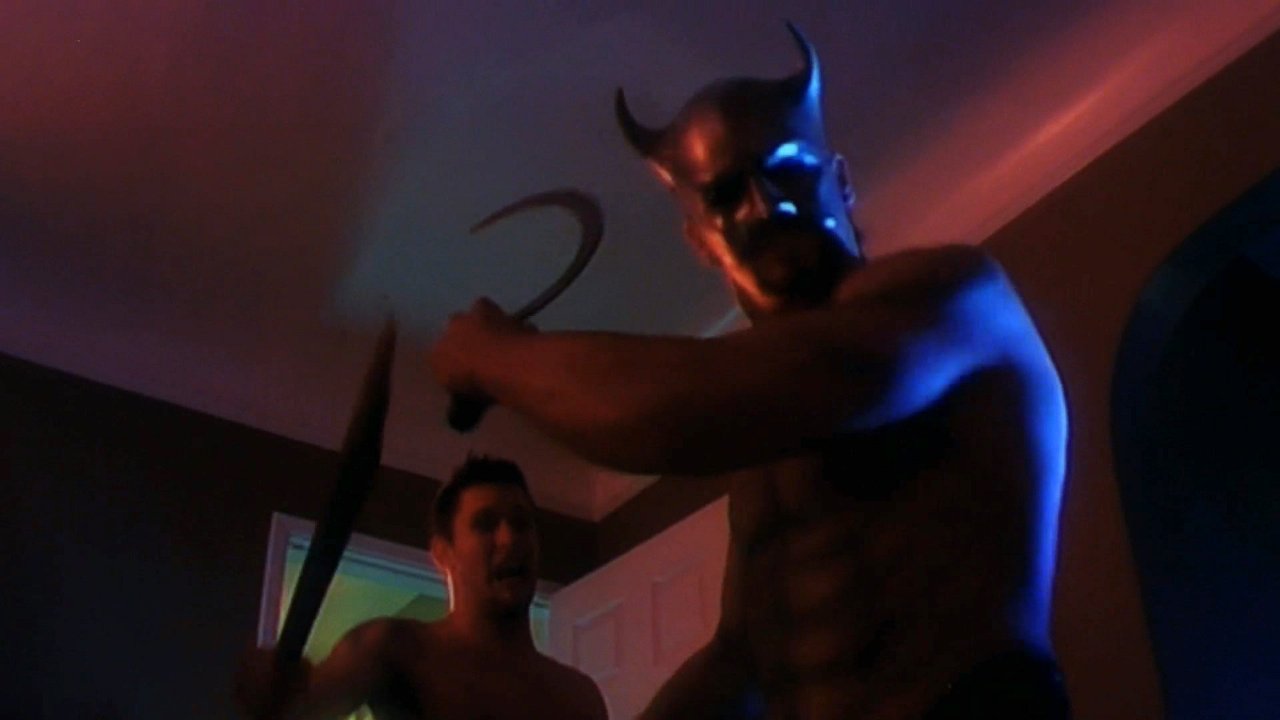
The film is set in West Hollywood on Halloween. A demon-masked psycho has selected four friends and flat-mates to kill, cleanly severing their heads with a sickle before carting them off to put on display for reasons that aren’t readily evident. Apart from the screenplay’s lack of exposition with regard to the killer, they’ve spared plenty of time to flesh out the four young men at the center of the story. Each gay, there’s nothing unusual, excessive, or outrageous about these characters, especially compared to outlandish similar characters in other genre pics.
It’s a bit surprising that it took until the mid-2000’s for the first such feature to be produced, but Paul Etheredge-Ouzts’ feature debut was filled with promise and proves that you don’t have to resort to lame acting, weak setups, and haphazard construction to make an effective horror. The gay sub-genre of film, in general, tends to feature gay actors who aren’t particularly skilled in the craft and that results in films that feel cheap and dated before they are released. HellBent may suffer from weak production values due to its minuscule budget, but the actors bring the same level of craft to this work as they would to any above-average horror film.
For films breaking glass ceilings for representation, there seem to be two distinct schools of thought. One group believes that simply featuring gay characters in typically non-gay roles is a breakthrough and a pushing forward of boundaries. The other says that it requires gay filmmakers to make these genres their own and only then will they be worthy of celebration. Both viewpoints have positives and negatives. The former, which largely characterizes this film, shows that there’s no reason gay characters can’t play in “traditionally” non-gay genres. However, they sometimes feel familiar and can be dismissed for being more of the same. The latter style allows new perspectives into staid genres and give audiences a chance to revel in inventiveness but then ultimately find smaller, niche audiences.
Is a film that caters only to one demographic an inherently more progressive effort than one that opts for a more traditional audience with an accessible, if atypical focus and which can have broader appeal and reach wider audiences? There’s no right answer and finding a balance or even tackling both approaches could push forward a more egalitarian landscape for genre and non-genre characters alike. Either way, the importance is getting the perspective out there, not diminishing one or the other. HellBent straddles the line, leaning more into familiar horror concepts rather than unique stylizations.
Although HellBent didn’t set the horror world on fire, it was a capable and engaging feature that should please any slasher fan. It didn’t completely redefine the genre but it did show that horror films with LGBTQ+ protagonists can stand alongside their peers with an entertaining product without having to be some genre-redefining evolution.
Review Written
July 21, 2026





















Leave a Reply